

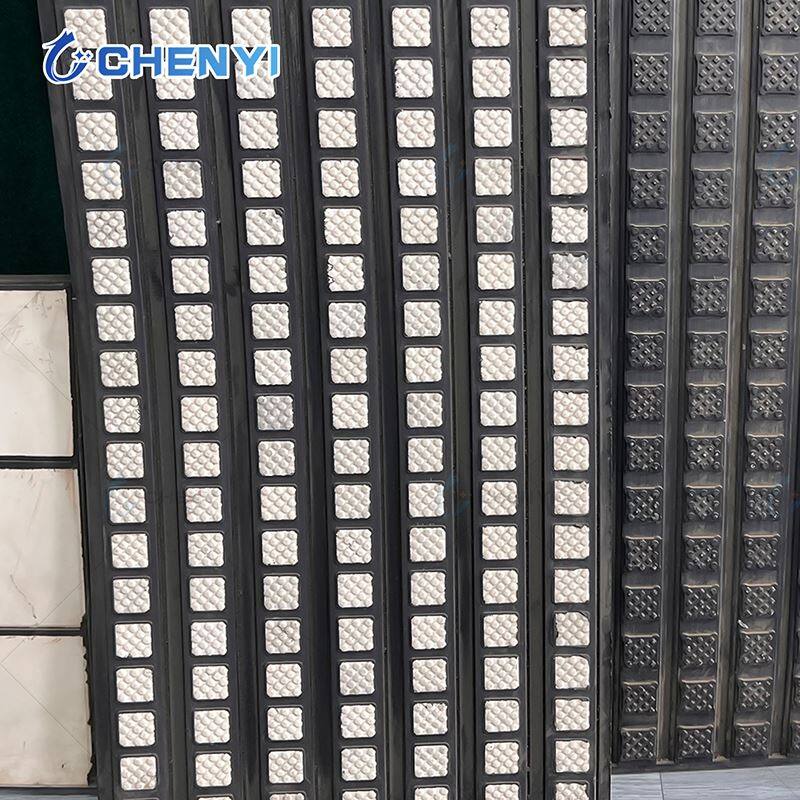
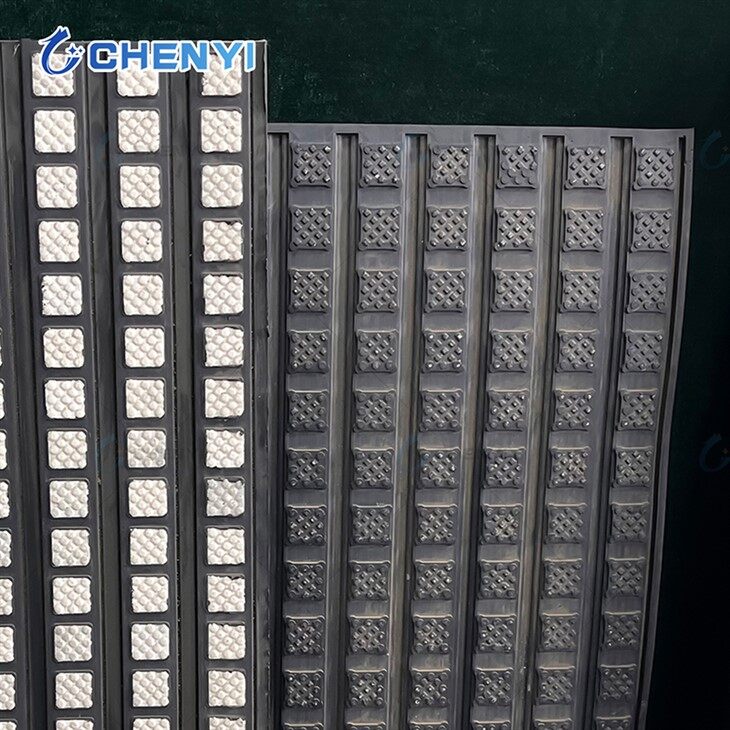
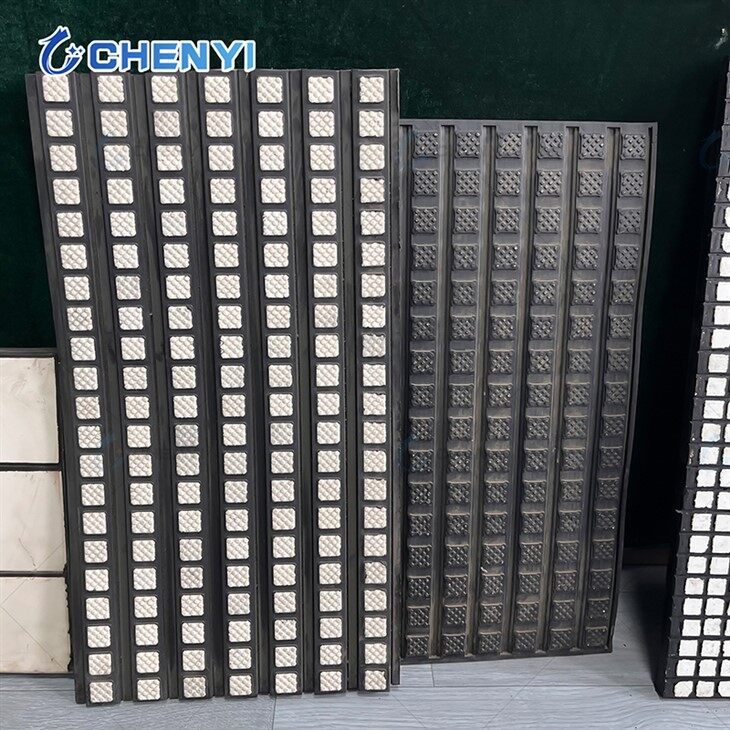
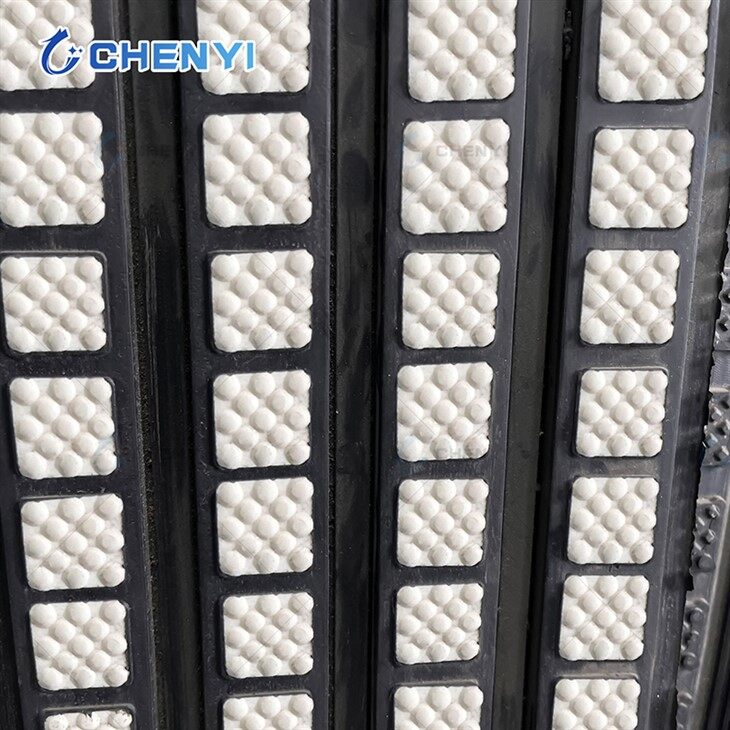

Zibo Chenyi Advanced Materials Co., Ltd. is one of the leading manufacturers and suppliers of pulley lagging in China, also supports customized service. If you're going to buy CE approved pulley lagging made in China, welcome to get quotation from our factory. Quality products and low price are available.
PULLEY LAGGING

Pulley lagging is a common process in industrial conveyor systems, which involves covering the surface of rollers with rubber material. It is widely used in various industrial conveyor applications, with the core purpose of improving the wear resistance and anti-slip performance of rollers, thereby effectively extending the service life of the equipment.
Rugular Size Of Ceramic Rubber Composite Liner
|
Normal Size |
50~800 |
The detailed specifications are based on factual conditions |
|
Thickness of Wear-resistant Ceramic Liner(mm) |
3~50 |
|
|
Thickness of Rubber |
4~8 |
Remark: Other sizes are available upon request.

Ceramic Rubber Composite Liner Technical Data Sheet
|
Name |
Project |
Unit |
Index |
|
Rubber |
Fracture Toughness |
20"C,Mpa % |
3.65 |
|
Thermal Shock Resistance |
ATc,°C |
250 |
|
|
Surface Roughness |
um |
V.9 |
|
|
Density |
g/cm3 |
≥1.2 |
|
|
Elongation |
% |
500 |
|
|
Tensile Strength |
Mpa |
18 |
|
|
Shore Hardness |
HA |
60±5 |
|
|
Peel Strength |
Mpa |
212 |
|
|
Temperature Range |
℃ |
-40-120 |
|
|
Steel |
Carbon Steel Plate |
Gpa |
Q235B,A36,SUS304 |
|
Thickness |
3-20 |
||
|
Bolt |
High Strength Bolts |
4.8Z8.8 |
|
|
Abrasion Resistance |
P=74N. n=800rpm. t=30min |
0.0005g |
|
|
Category |
CY90 |
CYT92 |
CY95 |
CYT95 |
CY99 |
CY-ZTA |
ZrO2 |
|
Al2O3 |
≥90% |
≥92% |
≥95% |
≥ 95% |
≥ 99% |
≥75% |
/ |
|
ZrO2 |
/ |
/ |
/ |
/ |
/ |
≥21% |
≥95% |
|
Density |
≥3.50g/ cm3 |
≥3.60g/cm3 |
≥3.65g/cm3 |
≥3.70g/cm3 |
≥3.83g/cm3 |
≥4.10g/cm3 |
≥5.90g/cm3 |
|
Water Absorption |
≤0.1% |
≤0.1% |
≤0.1% |
≤0.1% |
≤0.1% |
≤0.1% |
≤0.1% |
|
HV 20 |
≥900 |
≥950 |
≥1000 |
≥1100 |
≥1200 |
≥1350 |
≥1100 |
|
Rock Hardness HRA |
≥80 |
≥82 |
≥85 |
≥88 |
≥90 |
≥90 |
≥88 |
|
Bending Strength MPa |
≥180 |
≥220 |
≥250 |
≥300 |
≥330 |
≥400 |
≥800 |
|
Compression strength MPa |
≥970 |
≥1050 |
≥1300 |
≥1600 |
≥1800 |
≥2000 |
/ |
|
Fracture Toughness KIc MPam 1/2 |
≥3.5 |
≥3.7 |
≥3.8 |
≥4.0 |
≥4.2 |
≥4.5 |
≥7.0 |
|
Wear Volume |
≤0.28 cm3 |
≤0.25cm3 |
≤0.20cm3 |
≤0.15cm3 |
≤0.10 cm3 |
≤0.05cm3 |
≤0.02cm3 |

Features
Pulley Lagging refers to the process of covering the surface of a pulley with rubber material in industrial transmission systems. This process involves bonding a rubber layer with specific properties to the pulley base, thereby achieving multiple functional improvements:
Enhanced wear resistance and durability: The rubber coating significantly reduces surface wear on the pulley during long-term operation, extending equipment replacement cycles and lowering maintenance costs.
Optimized transmission friction: The texture and elasticity of the rubber surface enhance the grip between the pulley and the conveyor belt, eliminating slippage and ensuring stable and efficient material conveyance.
Cushioning and vibration damping: The elastic structure of rubber effectively absorbs mechanical vibrations during transmission, reducing equipment resonance damage and improving system operational stability.
Environmental adaptability and protection: In special conditions such as acid-alkali corrosion and humidity, the rubber coating provides chemical resistance. Additionally, for different environmental conditions such as temperature and dust, specific materials like nitrile rubber or polyurethane rubber can be selected for compatibility.
Noise reduction and energy-saving advantages: The rubber's damping properties reduce transmission noise, while its low friction coefficient and sealing performance minimize energy loss, contributing to system energy conservation and emissions reduction.
Safety Performance Enhancement: By eliminating slippage risks, it reduces safety hazards such as material spillage and equipment failures caused by transmission failures, thereby enhancing industrial production safety.
Core Advantage Summary
Material Adaptability: Customize rubber types (such as wear-resistant, oil-resistant, high-temperature-resistant, etc.) based on operational requirements to achieve tailored protection.
Comprehensive Performance Enhancement: Optimize pulley performance across multiple dimensions-from wear resistance, slip prevention, vibration damping, noise reduction, to corrosion resistance-to reduce lifecycle costs.
Application Areas
Drum covering technology, which involves coating the surface of drums with rubber materials of different properties, has been widely applied in various material handling scenarios across industrial sectors.
1. Heavy Industry Material Transportation Scenarios
Transportation of heavy materials such as ore: For the transportation of large ore blocks in mining and metallurgy industries, high-hardness, impact-resistant rubber coatings are used to withstand material impact and friction, thereby extending the service life of the drums.
Container and bulk cargo handling: In port and logistics warehousing scenarios, wear-resistant rubber coatings enhance friction between the drum and cargo contact surfaces, ensuring stable material handling during heavy-load cargo operations and preventing slippage or material spillage.
2. Food and hygiene-sensitive areas
Food-grade conveying systems: In industries with strict hygiene requirements, such as baking and dairy products, food-grade rubber (such as FDA-certified silicone rubber or EPDM rubber) is selected to meet non-toxic and easy-to-clean standards, prevent material adhesion, and ensure safety during the conveying process.
3. Special Industrial Process Scenarios
Paper-making conveying process: For different operating conditions in the wet and dry sections of paper machines, water-resistant and fiber-wear-resistant rubber materials are used to prevent pulp adhesion and drum corrosion, ensuring the precision of paper formation and conveying.
Chemical Corrosion-Resistant Conveying: In the chemical and pharmaceutical industries, when exposed to corrosive media such as acids and alkalis, use chemically resistant materials like butyl rubber or fluorocarbon rubber. These materials form a protective layer to block media corrosion, ensuring stable equipment operation in harsh environments.
4. Agriculture and Feed Processing Sector
Grain and Feed Conveying: In grain processing and livestock feed production, wear-resistant and dust-resistant rubber coverings are used to reduce grain particle wear on rollers while minimizing material breakage through elastic cushioning, thereby ensuring conveying efficiency and material integrity.
5. Core Logic of Technical Compatibility
The core advantage of drum covering technology lies in material customization: rubber hardness (e.g., Shore hardness 60–90A), thickness (3–20 mm), and material type (natural rubber, nitrile rubber, polyurethane, etc.) can be adjusted according to operational requirements to precisely match performance characteristics such as wear resistance, temperature resistance, corrosion resistance, and elasticity, thereby achieving protective and efficiency-enhancing functions across various industries.
From heavy-duty transportation in heavy industry to food-grade conveying systems, drum covering technology centers on the principle of "material properties tailored to operational requirements." Through personalized design of rubber covering layers, it provides multi-functional protection such as wear resistance, anti-slip, corrosion resistance, and vibration damping for conveying systems across industries, making it a key technology for enhancing efficiency and reducing costs in industrial material handling.


Packaging & Transportation
Inner packaging protection: Each Pulley lagging is individually wrapped in high-density EPE pearl cotton. Edges and critical areas are reinforced with thickened foam corner guards to ensure the rubber coating remains protected from sharp object scratches and compression deformation during transportation.
Outer Packaging Reinforcement: Export-standard five-layer corrugated cardboard boxes or custom wooden pallets are used. The interior of the box is filled with anti-vibration bubble wrap, and gaps are filled with honeycomb cardboard to prevent product movement inside the box. For oversized products, solid wood boxes are used, with high-strength steel straps securing the interior to ensure stability during long-distance transportation.
Moisture-proof treatment: Sufficient desiccants (silica gel or montmorillonite desiccants) are placed inside the packaging, sealed in moisture-proof plastic bags to prevent rubber coatings from aging or metal substrates from rusting due to moisture during sea transport.
II. Logistics and Transportation Solutions
Transportation method selection:
Small urgent orders: Recommended international couriers such as DHL or FedEx, with delivery in 3-5 business days and full GPS tracking;
Bulk cargo: Prioritize full container load (FCL) or less than container load (LCL) sea freight, collaborating with reputable shipping companies like MSK or COSCO to ensure stable and provide door-to-port or door-to-door services;
Land Transport Requirements: China-Europe Railway Express or Central Asia Railway Transport, with controllable delivery times, suitable for distribution to inland countries.
Transportation Safety Measures: Goods are secured with anti-tilt and anti-collision measures during loading, with fragile labels and center of gravity markers clearly affixed; marine cargo insurance covers all risks, including damage or loss during transportation, ensuring safe delivery of goods.
Contact Us
Zibo Chenyi Advanced Materials Co., Ltd. specializes in the Pulley Lagging industry, leveraging its superior production processes and customized services to achieve widespread success in markets across Australia, Canada, Russia, Kazakhstan, and other countries, earning the trust and recognition of global customers. The company offers a comprehensive product range with diverse specifications and structural options. It can tailor solutions to meet specific operational requirements, including material type, hardness, thickness, and surface texture, ensuring that each Pulley Lagging product precisely matches different working environments and provides efficient, reliable solutions for material handling systems.
Contact us for a quote or customization information.
E-mail:bonniejing@zbchenyi.com
Tel/WhatsAPP:+86 13864474677


