


Zibo Chenyi Advanced Materials Co., Ltd. is one of the leading manufacturers and suppliers of wear-resistant alumina ball in China, also supports customized service. If you're going to buy CE approved wear-resistant alumina ball made in China, welcome to get quotation from our factory. Quality products and low price are available.
Alumina ball is featured by high density and hardness, low wear lost, corrosion-resistance etc. They are the perfect high-efficient grinding media for grinding glaze, pigment, ceramic materials, and various mine ore powder, they are widely used in ceramics, cements, paints, refractories, inorganic mineral powders industries.This product are featured by high density and hardness, low wear lost, corrosion-resistance etc. They are the perfect high-efficient grinding media for milling glaze/frit, pigment, ceramic materials, and various mine ore powder. Applied for dry grinding , wet grinding ,mineral grinding , quartz grinding , lineston grinding , iron ore grinding , cement grinding , ceramics plants grinding , pigment grinding , mineral ore grinding , breaking platns .
Advantages of Wear-resistant Alumina Ball
High wear resistance
Alumina ceramic balls have better wear resistance than ordinary ceramic balls. When the grinding ceramic ball is in operation, it does not produce pollution, so it can maintain high purity and improve the stability of the grinding effect.
Temperature Regulation
The friction generated during grinding can elevate the temperature of the materials, affecting their properties and quality. Ceramic alumina balls have excellent thermal conductivity, which helps dissipate heat, maintaining optimal processing temperatures. This temperature regulation contributes to the preservation of material characteristics.
Minimal Media Residue
Residue from grinding media can compromise product quality and clog equipment. Ceramic alumina balls have minimal media residue due to their abrasion resistance, ensuring cleaner processing and reducing the need for frequent equipment cleaning.
Versatility Across Industries
The versatility of ceramic alumina balls extends to various industries, including pharmaceuticals, chemicals, paints, coatings, and more. Their ability to enhance processing efficiency and maintain product integrity makes them a valuable asset in diverse applications.
Applications of Alumina Ball
Wear-resistant alumina ball is a kind of high-performance ceramic material, which is widely used in many industrial fields.
Grinding and crushing industry
Wear-resistant alumina balls are widely used as grinding media. They are commonly used in equipment such as ball mills, vibrating mills and stirring mills for grinding various hard materials such as ceramics, glass, cement, ores and metal powders. Due to its high hardness and wear resistance, alumina balls can effectively reduce wear and extend the service life of the equipment, while improving the grinding efficiency and ensuring the uniformity and fineness of the product particles.
Chemical industry
Wear-resistant alumina balls also have important applications in the chemical industry. They are used as catalyst carriers, especially in processes such as oil refining, chemical synthesis and waste gas treatment. The high surface area and chemical stability of alumina balls enable them to effectively carry catalysts, improve reaction efficiency, and maintain stable performance in high temperature and corrosive environments.
Electronics industry
Wear-resistant alumina balls are used to manufacture electronic components and semiconductor materials because of their excellent insulation properties and high temperature resistance. They can be used as fillers or support materials to ensure the reliable operation of electronic devices in high temperature and high voltage environments.
What is the Recommended Ball-to-Powder Ratio for Alumina Ball
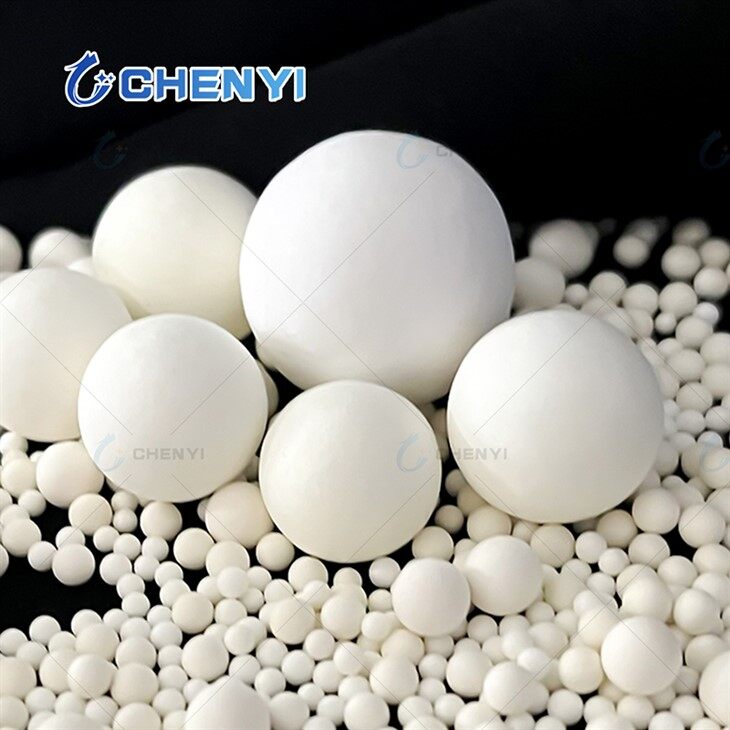
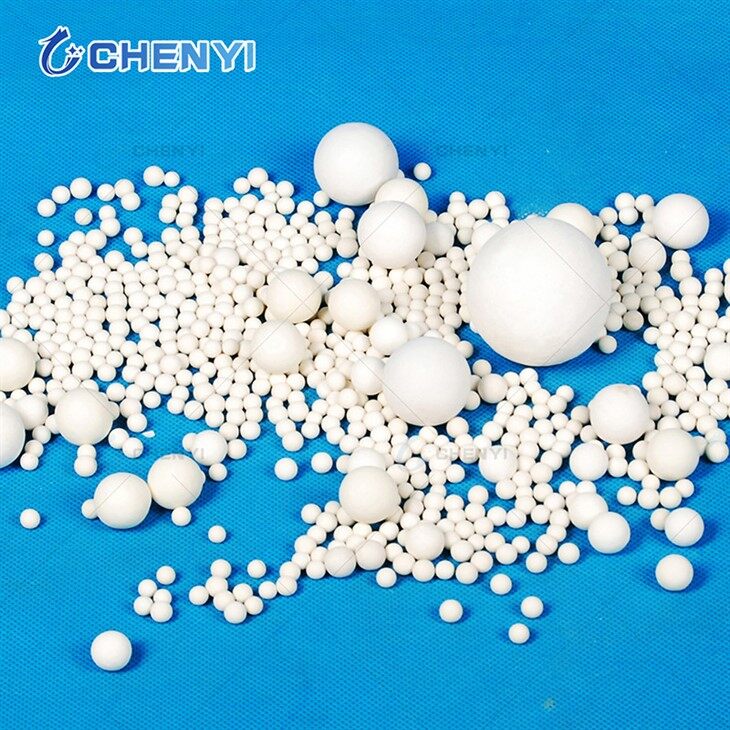
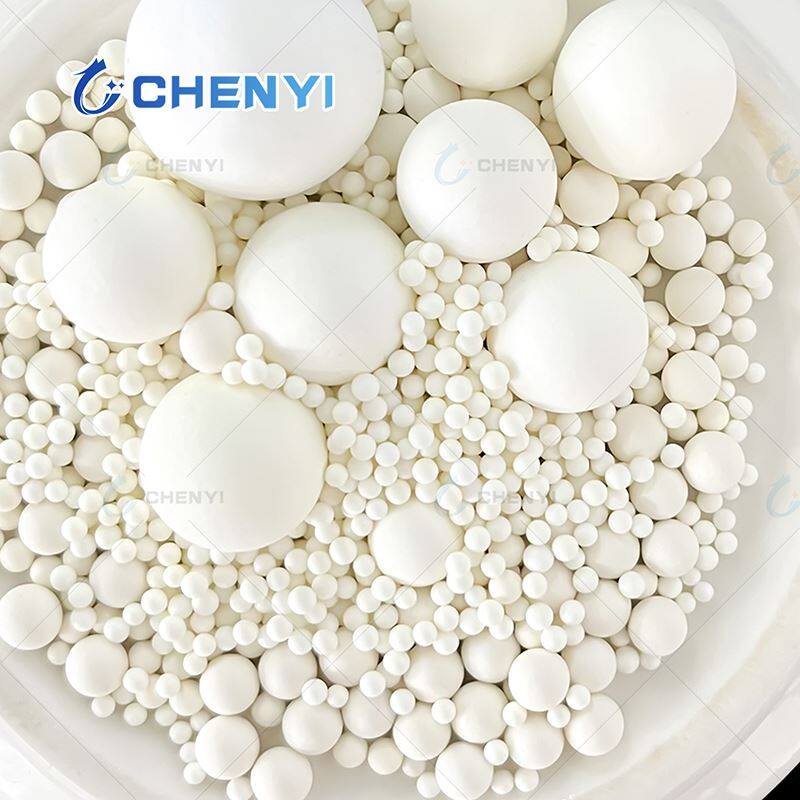
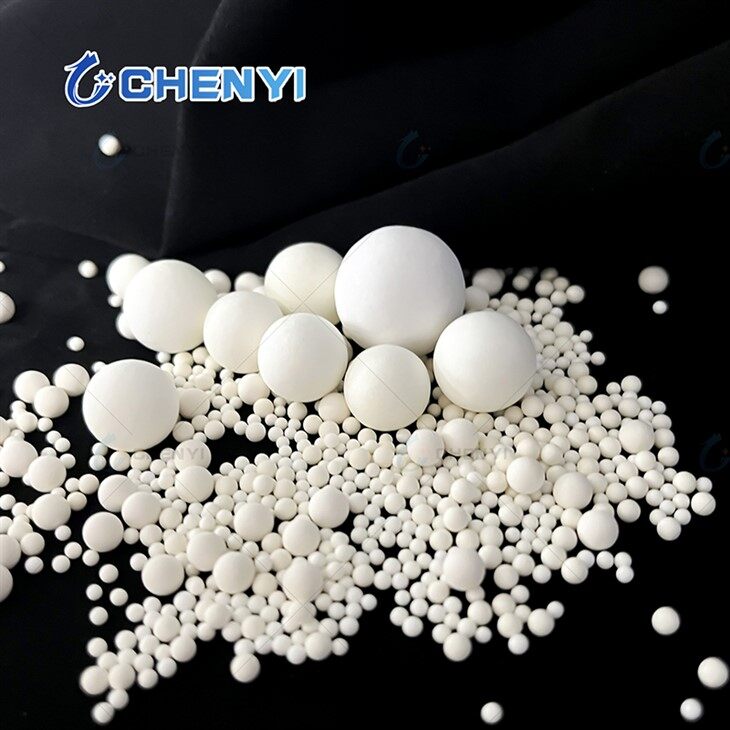
The recommended ball-to-powder ratio for ceramic alumina balls typically falls within the range of 1:1 to 1:3. This ratio refers to the proportion of grinding media (balls) to the amount of material being ground (powder). The choice of specific ratio depends on various factors that influence the grinding process and the desired outcomes.
Several factors contribute to determining the appropriate ball-to-powder ratio
Material Properties: Different materials have varying hardness, brittleness, and other characteristics that affect the grinding process. Harder materials may require a lower ratio to prevent excessive wear on the balls.
Desired Particle Size: The final particle size distribution required for the application influences the ratio. Finer particles often necessitate a higher ratio to achieve the desired results.
Grinding Time: Longer grinding times may require adjustments in the ratio to prevent overgrinding and maintain material integrity.
Mill Type: The type of mill used, whether it's a ball mill, planetary mill, or attritor mill, can impact the optimal ratio due to differences in grinding mechanisms.
The ball-to-powder ratio plays a significant role in the grinding process
Efficient Grinding: A balanced ratio ensures proper collision and interaction between the grinding media and the material. This leads to efficient particle size reduction.
Prevention of Overloading: A high ball-to-powder ratio can lead to overloading the mill, hindering efficient grinding and potentially damaging the equipment.
Material Contamination: An imbalanced ratio can lead to increased wear on the grinding media, resulting in contamination of the material being ground.
Achieving optimal grinding results with ceramic alumina balls requires practical considerations
Experimentation: Due to the varied nature of materials and grinding conditions, experimentation with different ratios is often necessary to find the most effective balance.
Monitoring Grinding Progress: Regularly monitoring the grinding progress, particle size distribution, and wear on the balls can help determine if adjustments to the ratio are needed.
Maintaining Material Integrity: While a higher ratio may lead to faster grinding, it's essential to balance this with the risk of damaging the material's structure and properties.
How Alumina Balls Can Improve Oil Purification Process
Alumina balls for oil purification are an effective way to remove water and contaminants from the oil. The desiccants are highly porous and absorbent, making them ideal for oil purification.
The porous and absorbent nature of the alumina balls makes them ideal for oil purification. The porosity of the balls allows oil to pass through and be filtered. As the oil passes through the balls, the water molecules and contaminants are absorbed, leaving behind clean oil. The absorbency of the balls ensures that moisture and contaminants are not released back into the oil.
When using alumina balls for oil purification, it is important to ensure that the desiccant is of the highest quality, because poor quality may not be as effective in removing moisture and may even release contaminants back into the oil. Therefore, it is important to choose a suitable desiccant-activated alumina for oil purification.
Oil should be filtered with the alumina balls in a way that ensures that the oil flows through them in a continuous flow. This will ensure that all the contaminants and moisture are absorbed by the desiccant.
It is also important to ensure that the flow rate of the oil is not too high. Too high a flow rate will cause the balls to be pushed out of the filter and reduce their effectiveness. The ideal flow rate should be such that the oil passes through the balls at a slow and steady pace.
Once the purification process is complete, the alumina balls should be replaced. This is to ensure that the balls remain effective and to prevent any contaminants from being released back into the oil. The balls should also be inspected regularly for any signs of damage or wear.
How to Store Alumina Ball
As durable ceramic products, ceramic alumina ball media have an indefinite shelf life, insofar as the packaging remains intact and undamaged. The following cautions describe storage recommendations helpful to preserve package integrity. Ceramic ball media packaged in steel drums need only be kept in an environment which will not degrade the steel drums, such as prolonged standing water in the lids, or in standing water. As long as the drum remains sealed, with lids intact, and no punctures or corrosion. Perforation, no other storage precautions are necessary. It is always advisable to cover the drums with sheeting to shed rain, snow, and dew.
Ceramic ball media packaged in bulk sacks (also known as flexible intermediate bulk containers, or fibc), one cubic foot or one-half cubic foot bags, or one cubic foot boxes should be kept in an environment which will keep the packages free from moisture and sunlight exposure. Exposure to sunlight, however brief, will cause degradation of the bulk sacks, one cubic foot, or one- half cubic foot bags, due to attack of the polymeric fabric, strapping, and threads by ultraviolet light (uv). This will eventually occur, even though the polymer is treated with a uv stabilizer. The uv stabilizer is not permanently effective. Significant and permanent damage to polymeric bulk sacks or bags is possible in as little as 10-14 days of exposure to sunlight. Packages which have been kept in storage must be inspected for physical integrity prior to lifting or movement, to ensure that the bulk sack, bag or box has not deteriorated, creating personnel safety hazards or the possibility of equipment damage.
General storage suggestions
Inside, dry storage is greatly preferred for all packages. All packages should remain on pallets in any storage environment. Lean-to, shed, or pole-barn storage or any open-sided tent or building is a second-best option, so far as sunlight does not impinge on polymeric bags. Outside storage, if necessary, requires extra precautions:
- The storage site should be free of standing water, preferably a pavement pad, or well-draining gravel or shell.
- Unimproved lay-down yards, or areas of dirt or grass, should be avoided. The loaded pallets weigh over one ton each and will sink into soft ground.
- Polymeric bulk sacks or bags, or cardboard boxes, must be covered at all times, with opaque tarps or sheeting, completely to the ground, to prevent uv damage and to shed rain or heavy dew. Failure to do so is at the user's risk.
Zibo Chenyi Advanced Materials Co., Ltd is a high-tech enterprise including scientific research, manufacture and trading. We have a high quality research team and experienced design, production & fabrication team, also had established a close cooperative relationship with scientific research institutions and institutions of universities and colleges. Our company have been always working on the technology development, product design & manufacture, and site operation for the wear resistant materials and carbon fiber products to provide customers with good quality products and perfect solution.
Why Choose Us
Our Factory
We own full set of advanced production equipment, with advanced production technology and raw materials in domestic and abroad to provide tailor-made solutions for each customer.
Our Product
Rubber ceramic liner, polyurethane ceramic liner, ceramic pulley lagging, ceramic lined pipe, alumina ceramic product, silicon carbide product, ZTA product and other wear resistant product.
Our Certificate
ISO9001, 3 patents, UDEM, TUV.
Production Market
Australia, America, Germany, Japan, Kazakhstan, Italy, Belgium,UK, Denmark and other marketing.
Product Application
Coal-conveying system, coal pulverizing system, dust removing system, dust disposing system and mineral processing system.
Our Service
Various high-quality wear-resistant materials are available for selection, scheme design and production, on-site construction guidance. Very comprehensive after-sales support.
FAQ


