


Zibo Chenyi Advanced Materials Co., Ltd. is one of the leading manufacturers and suppliers of ceramic grinding ball in China, also supports customized service. If you're going to buy CE approved ceramic grinding ball made in China, welcome to get quotation from our factory. Quality products and low price are available.
Zibo Chenyi Advanced Materials Co., Ltd is a high-tech enterprise including scientific research, manufacture and trading. We have a high quality research team and experienced design, production & fabrication team, also had established a close cooperative relationship with scientific research institutions and institutions of universities and colleges. Our company have been always working on the technology development, product design & manufacture, and site operation for the wear resistant materials and carbon fiber products to provide customers with good quality products and perfect solution.
Why Choose Us
Our Factory
We own full set of advanced production equipment, with advanced production technology and raw materials in domestic and abroad to provide tailor-made solutions for each customer.
Our Product
Rubber ceramic liner, polyurethane ceramic liner, ceramic pulley lagging, ceramic lined pipe, alumina ceramic product, silicon carbide product, ZTA product and other wear resistant product.
Our Certificate
ISO9001, 3 patents, UDEM, TUV.
Production Market
Australia, America, Germany, Japan, Kazakhstan, Italy, Belgium,UK, Denmark and other marketing.
Product Application
Coal-conveying system, coal pulverizing system, dust removing system, dust disposing system and mineral processing system.
Our Service
Various high-quality wear-resistant materials are available for selection, scheme design and production, on-site construction guidance. Very comprehensive after-sales support.
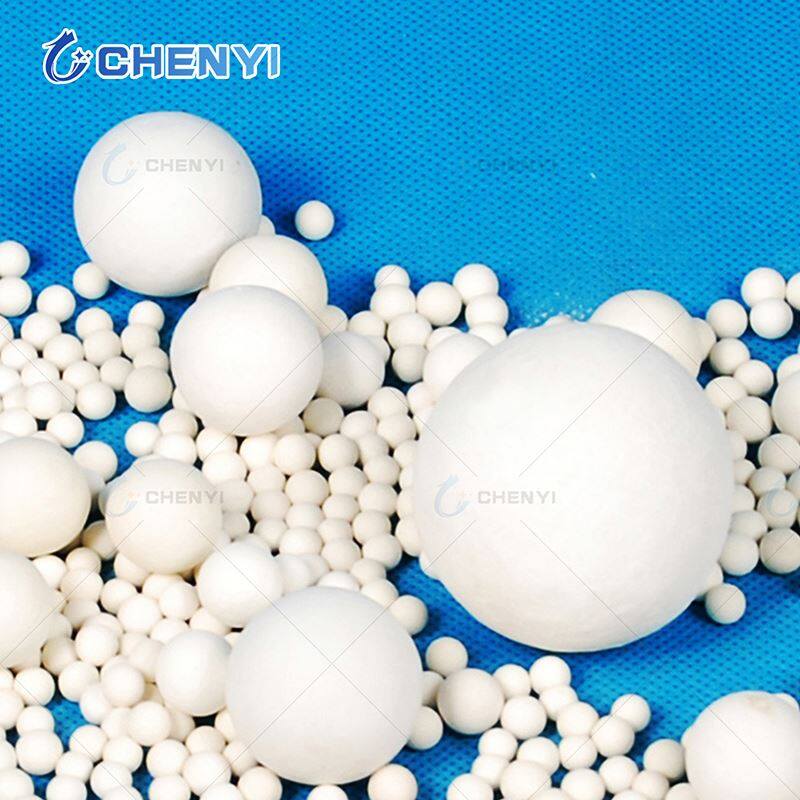
Ceramic Grinding ball is the grinding body of ball mill, pot mill, vibration mill and other fine grinding equipment. It has the advantages of high hardness, large volume density, corrosion resistance and so on. Its crushing efficiency and wear resistance are better than ordinary nodules and natural cobblestones.
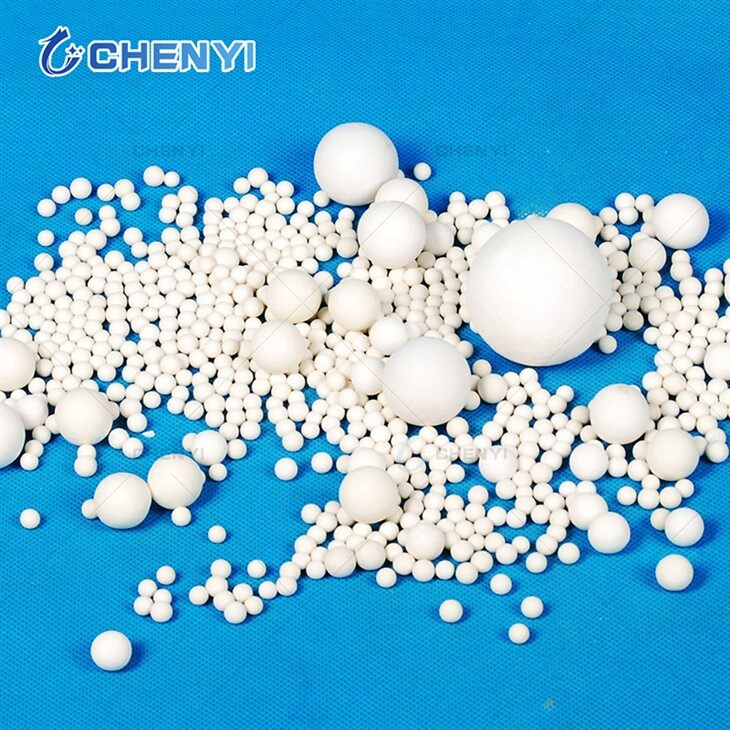
They are the perfect high-efficient grinding media for grinding glaze, pigment, ceramic materials, and various mine ore powder, they are widely used in ceramics, cements, paints, refractories, inorganic mineral powders industries.
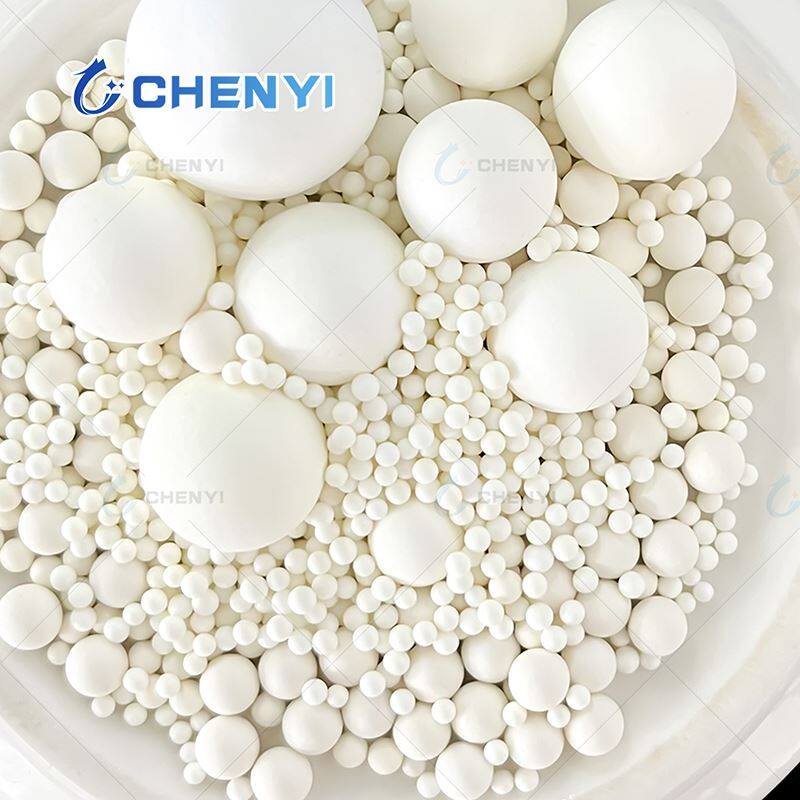
They are the perfect high-efficient grinding media for milling glaze/frit, pigment, ceramic materials, and various mine ore powder, they are using ceramics, cements, paints, refractories, inorganic mineral powders etc.
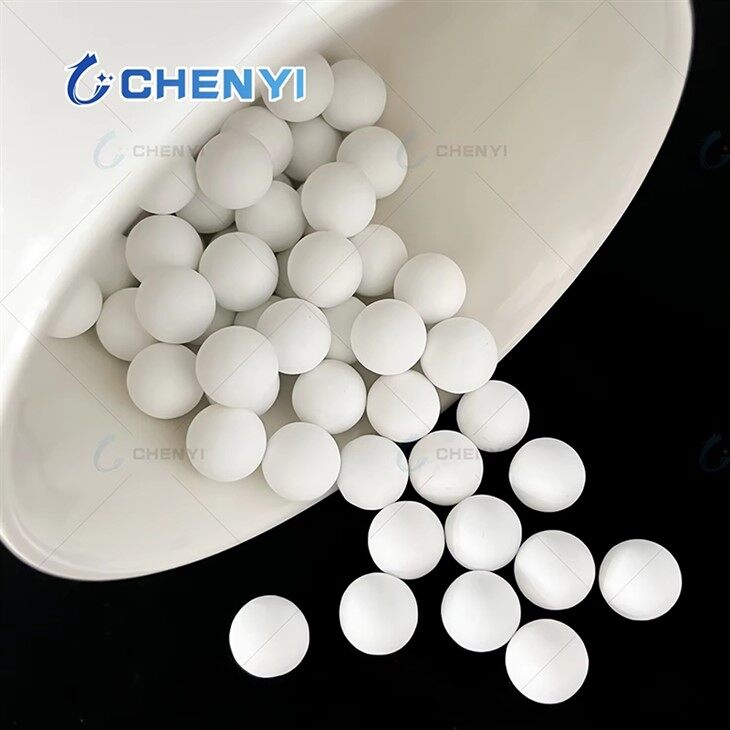
Alumina ball is applied for dry grinding , wet grinding ,mineral grinding , quartz grinding , lineston grinding , iron ore grinding , cement grinding , ceramics plants grinding , pigment grinding , mineral ore grinding , breaking platns.
Ceramic Grinding ball is the grinding body of ball mill, pot mill, vibration mill and other fine grinding equipment. It has the advantages of high hardness, large volume density, corrosion resistance and so on. Its crushing efficiency and wear resistance are better than ordinary nodules and natural cobblestones. It is widely used in ceramics, enamel, pigments, chemical industries and so on. Wear-resistant alumina porcelain ball and lining brick are made of high quality grinding medium by using selected raw materials, advanced cold isostatic pressing technology and high temperature calcination.
Advantages of Ceramic Grinding Ball
Quality and size: The range of ceramic grinding balls with various sizes from 0.5mm to 60mm and alumina purity range from 92% to 99.5% provides multiple choices to meet the grinding requirements.
The small crystal size of ceramic grinding balls continuously media and even small wear.
Time-saving: The high density and perfect roundness provide greater grinding efficiency, thus saving time.
Cost-saving: High impact strength and wear resistance reduce replacement costs.
Ceramic Grinding Ball vs. Steel Grinding Balls
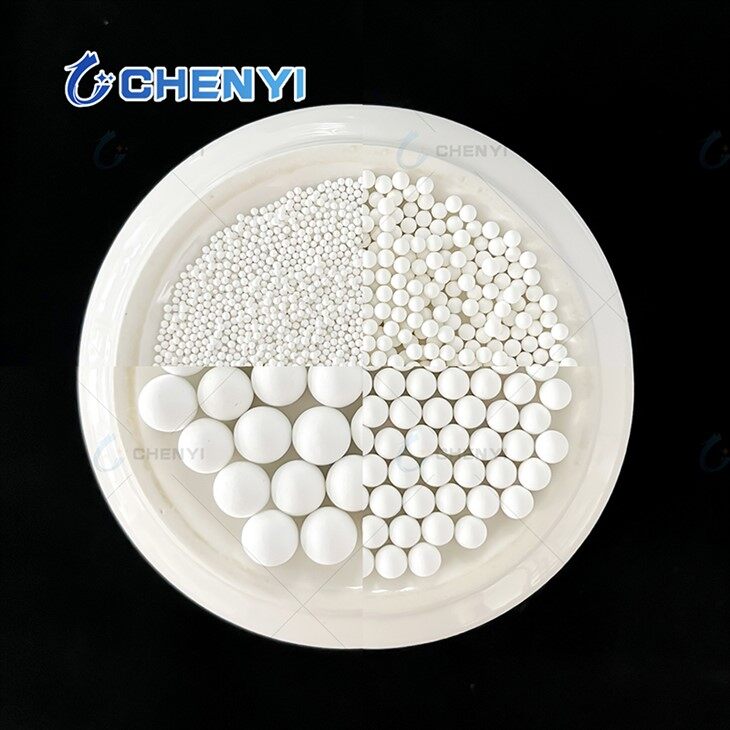
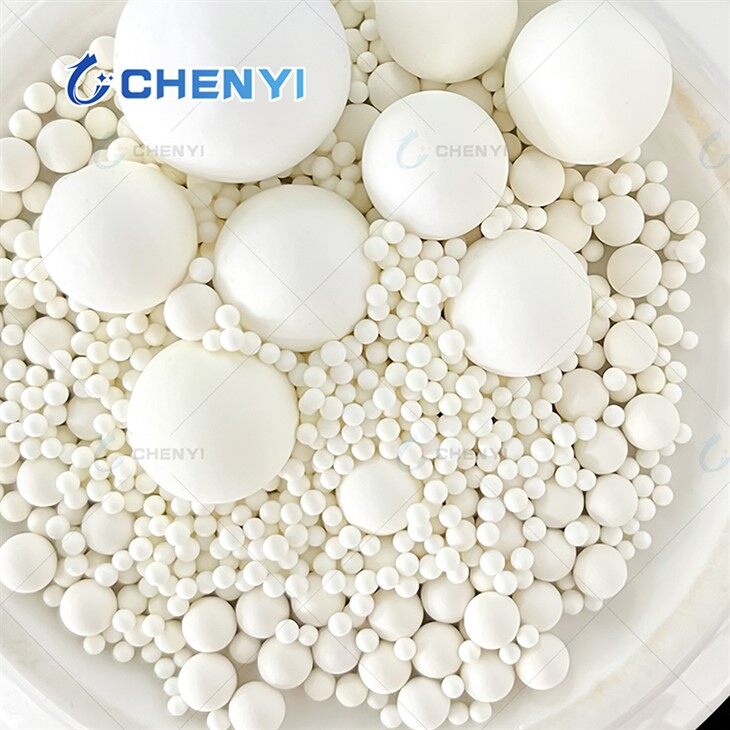
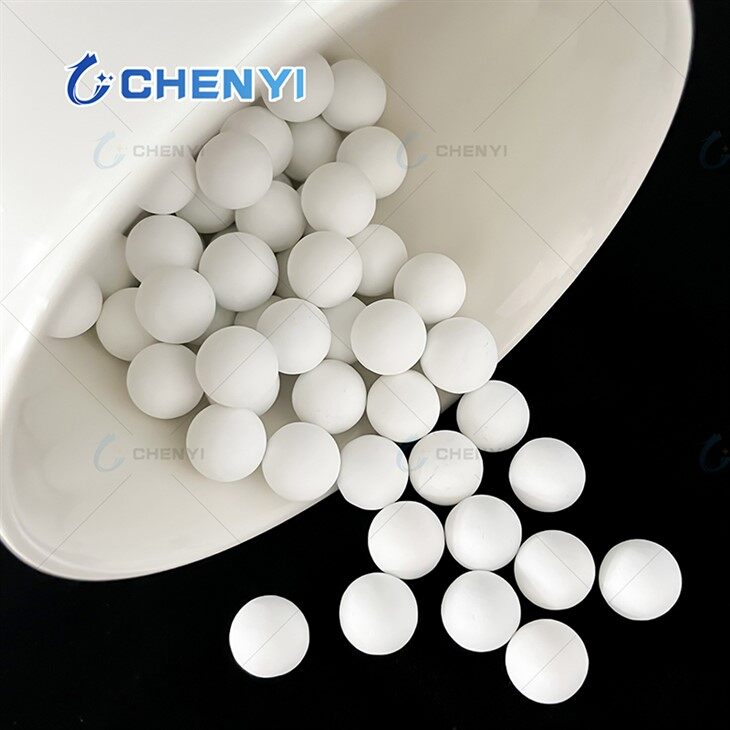
Composed of materials like silicon nitride, alumina, and zirconia, ceramic balls are selected for their durability, resistance to wear, and chemical stability. They are produced through a process of high-temperature firing and precision grinding, resulting in balls with notable hardness, low density, and high resistance to temperature and corrosion. These properties make them suitable for grinding applications where contamination must be minimal and efficiency Is key.
Steel grinding balls
Forged or rolled from various types of steel, these balls' properties-hardness, resilience, and wear resistance-are influenced by the steel's composition. The production process involves heating and shaping the steel into balls, then heat-treating them to obtain the desired characteristics. Known for their impact strength and heft, steel balls are Ideal for heavy-duty grinding tasks where abrasiveness and mechanical wear are prevalent.
Efficiency and Effectiveness
Ceramic balls enhance the grinding process by reducing friction and wear, leading to quicker processing and energy savings. Their inertness also prevents chemical interaction with the ground material, preserving its purity. Steel balls, with their greater density and impact strength, excel at breaking down tougher materials, essential in sectors like mining and cement production.
Wear Resistance and Durability
Ceramic balls offer superior wear resistance, prolonging their lifespan and reducing replacement frequency. This also means less contamination of ground materials, vital in industries like pharmaceuticals and food processing. Steel balls, though hardy, may wear faster in high-impact settings, potentially increasing operational costs over time.
Impact on Ground Materials
The composition of grinding balls can affect the purity and traits of the ground material. Ceramic balls, being inert, eliminate contamination risks, crucial in electronics, pharmaceuticals, and food production. Steel balls might introduce metallic contamination under certain conditions, which could be undesirable in some applications.
Operational Consideration
The success of grinding processes depends on the compatibility of the grinding media with the operation's specific conditions and requirements. This requires careful consideration of the grinding types and environmental factors that could impact the performance and longevity of ceramic and steel balls.
Application Suitability
Ceramic balls are favored in precision applications needing minimal contamination, like in pharmaceutical, food processing, and semiconductor industries, due to their wear resistance and inertness. Steel balls are preferred for grinding hard materials in heavy-duty operations like mining and cement production, thanks to their impact strength and durability.
Environmental Factors
Grinding balls' performance can be influenced by environmental conditions like temperature and humidity. Ceramic balls withstand a broader range of conditions, including high temperatures and corrosive environments. Steel balls may be more prone to corrosion unless treated or made from corrosion-resistant alloys.
Economic Factors
Choosing between ceramic and steel grinding balls involves considering their initial cost and long-term cost-effectiveness, including maintenance and replacement needs.
Cost Analysis
Ceramic balls, though more expensive initially, may offer a lower total cost of ownership due to their durability and reduced wear rate. They require less frequent replacement, beneficial for processes where purity Is critical.
Maintenance and Replacement
Ceramic balls have lower maintenance needs, thanks to their wear and corrosion resistance, leading to less downtime and fewer replacements. Steel balls may need more frequent replacements in demanding environments, increasing maintenance costs and potential production interruptions.
How to Make Ceramic Grinding Ball Smooth Surface
In fact, the factors that determine whether there is light on the surface of ceramic grinding balls are The flatness of the spherical surface; the more lubricated the spherical surface, the better the mirror effect; the rougher the spherical surface, the worse the mirror effect. The main factors that affect the flatness of the spherical surface are the internal structure of the material and the degree of processing outside the spherical surface. In the meantime, the outside processing of the spherical surface is relatively simple to understand. For example, the spherical surface of the grinding ball just after sintering is matt, and the spherical surface may have a mirror effect after polishing. The internal structure of the material includes pores, grain size, liquid phase, etc., and their effects on the flatness of the spherical surface are as follows:
Stoma
Because ceramic grinding balls after sintering generally have a high density, and there are few pores caused by sintering, the pores we are talking about here generally refer to major shortcomings caused by molding and other reasons.
For example, the powders for rolling balls include airflow powder, spray-dried powder, granulated powder, etc. They are essentially fake particles composed of countless individual crystal grains. However, because the powdering process is different and the particle strength of the powder is not the same, some false particles may not be completely crushed in the application, resulting in the grains cannot be completely close during the sintering process, resulting in shortcomings such as large holes.
Grain size
When the type of material is different, the degree of grinding of the material by each manufacturer is different, and the formula and sintering process are different, it will lead to different grain sizes in the sintered grinding ball. The finer the crystal grains, the flatter the spherical surface; the thicker the crystal grains, the more uneven the spherical surface, just like paving a road with stones and sand.
The zirconia grinding ball crystal grains are mostly 0.3um-0.5um, and the alumina grinding ball crystal grains are mostly 1um-5um. The zirconia crystal grains are finer and the spherical flatness is higher, so the zirconia spherical surface is brighter than the alumina spherical surface.
Liquid phase
Taking alumina ceramics as an example, in order to lower the sintering temperature of ceramics, some additives are added in general production. Some of them are additives that can generate liquid phase in high alumina porcelain, such as kaolin, bornite, silica fume, etc., which can form binary, ternary or more complex low-melting eutectics together with other additives. After adding an appropriate amount of additives, on the one hand, the sintering temperature of the ceramic can be lowered to make the crystal grains finer; on the other hand, the liquid phase formed will be the same as the asphalt of the pavement, so that the spherical surface is more flat and the spherical surface is naturally brighter. Up.
How to Use Ceramic Grinding Ball in Ball Mill of Cement Industry
Ceramic grinding ball is discharged into the bin with cast steel lining plate, which will impact the lining plate and cause different degrees of micro-cracks inside the grinding ball, affecting the service life. Therefore, empty warehouse loading grinding should first add 2~3 tons of bulk cement, in order to ease the unloading.
Although most of the present cement grinding system adopts pre-crushing equipment, which reduces the particle size of the grinding material a lot, when the particle size of the grinding material is 25mm, the first bin of the ball mill still needs the grinding ball to be in the throwing state, mainly for impact crushing effect, crushing the bulk material into new "grains". At this point, the grinding ball is not only subjected to a strong "reaction force ", but also inevitably hit the mill inside the dense cast steel lining, compartments and other components. Therefore, such conditions are not suitable for ceramic grinding balls with limited toughness. Otherwise, a higher rate of breakage will occur.
The cement ball mill cylinder is equipped with a double compartment plate, the front layer is composed of a number of grate plate assembly, the second layer is composed of no grate slot blind plate and the center discharge cone (vent). The fine particles in the front bin can flow into the sandwich layer of the compartment through energy seam, and then pass through the back layer, which rises from the hoisting plate on the board and falls to the outer wall of the middle unloading cone and slides to the next bin (tail bin). The inner wall of the unloading cone is the central vent of the mill. Under the action of the wind speed in the mill, the fine particles falling from the outer wall of the unloading cone will be blown away, leaving a distance from the compartment plate to form a "grinding ball"· the "empty material area" with more and less materials directly affects the effective utilization rate of this warehouse. If this bin is filled with ceramic grinding ball, it will cause collision and wear between grinding ball, grinding ball and steel lining plate, shorten the service life of grinding ball, speed up the rate of broken ball. Therefore, before using ceramic grinding balls, increase the length of the feeder plate as much as possible to make it close to the cylinder, so that the fine particles entering the sandwich layer of the compartment can be quickly picked up and more materials fall into the next bin. At the same time, the central control operation can properly reduce the wind, reduce the central wind speed, shorten the length of "empty material area", reduce the "self-damage" loss of ceramic grinding ball, and increase the effective work.
When ball mill cement grinding system is used in steel ball and steel forging, it is a common operation habit to "add material after starting empty grinding and stop grinding after discharging empty material". However, using ceramic grinding balls, these habits become the most common "killer" of "broken balls". The collision and friction between porcelain ball and steel lining plate will produce numerous micro-cracks, which will accelerate the expansion of cracks and finally lead to grinding ball cracking. Porcelain ball cracked surface, like a sharp edge, split to other grinding ball, no material block and buffer, cause grinding ball more extensive damage, a "ball war" will quickly spread.
Mechanical Abrasion
During polishing, ceramic grinding balls come into contact with the surface of the product in the way of rotation, vibration, or centrifuge. Due to the high hardness of the ceramic balls, they abrade the surface by removing burrs, something irregulary, or oxide layers, which makes the surface of the product smooth . The degree of abrasion depends on the hardness, size, shape of the grinding balls, the applied pressure, and the duration of the process.
Frictional Effects
As the ceramic balls roll or slide over the product, friction is created, which helps remove minor imperfections on the surface and make it smoother. The level of polishing depends on the material of the grinding ball and the smoothness of the ball's surface.
Uniform Pressure Distribution
Because ceramic grinding balls are uniform in shape and make multiple points of contact with the product, the polishing force is distributed evenly across the surface, which helps avoid over-polishing or uneven polishing in specific areas.
Use of Grinding and Polishing Fluids
Polishing processes often involve the use of polishing fluids. These fluids help cool the surface, lubricate the contact area, and accelerate the removal of material. The use of these fluids when polishing, can reduce heat generation and friction, prevent surface damage while increasing polishing efficiency.
Why Does The Ceramic Grinding Ball In The Ball Mill Broken
Overload
If the volume or weight of the grinding material exceeds the design capacity of the ball mill, it may result in excessive impact force on the ceramic balls, which leads to the increase risk of breaking.
Overlong grinding time
If the grinding time is too long, it will lead to ceramic grinding ball fatigue and the increase risk of breaking.
Uneven material distribution
If the grinding material is unevenly distributed, it may lead to more pressure on the ceramic grinding ball in certain areas, thus increasing the risk of crushing.
Overhigh operation speed
If the operation speed of the mill is too high, there may exist too much impact force between the grinding material and the ceramic grinding ball, leading to the increase risk of breaking.
Quality Of The Balls
If the quality of ceramic grinding ball is substandard, internal defects may exist, which makes ceramic grinding ball easy to break.
Environmental factors
Changes in temperature and humidity can also affect the performance of ceramic grinding ball, increasing the brittleness.
FAQ
Contact Us
Zibo Chenyi Advanced Materials Co., Ltd. is a professional manufacturer in the field of ceramic grinding balls, with years of experience in the industry, specializing in the research, development, and production of high-quality ceramic grinding balls. Currently, the company's products have successfully penetrated markets in multiple countries, including Australia, Canada, Russia, and Kazakhstan, and have earned widespread trust and acclaim from global customers due to their stable performance and reliable quality.
In terms of product portfolio, the company's ceramic grinding balls offer a wide range of specifications and content options, enabling flexible adaptation to diverse industrial grinding requirements. We adhere to the principle of "customer-centricity," leveraging our mature customized service capabilities to tailor ceramic grinding ball solutions that align with specific operational conditions, ensuring optimal performance across various complex working environments.
Contact us for a quote or customization information.
E-mail:bonniejing@zbchenyi.com
Tel/WhatsAPP:+86 13864474677


