

ZTA Ceramic
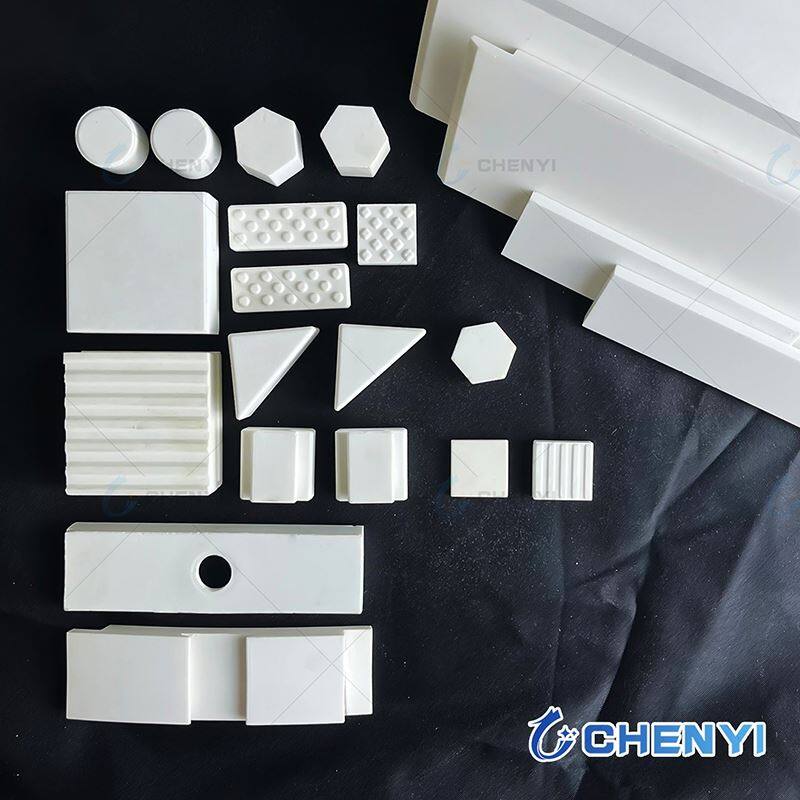
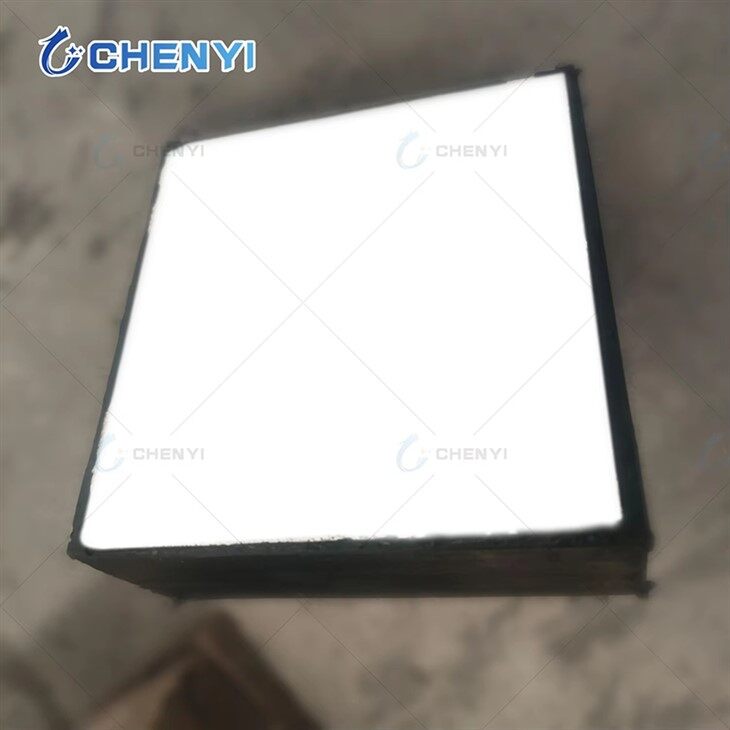
ZTA Ceramic introduces ZrO₂with similar lattices to Al₂O₃ in the ceramic formula, resulting in higher strength and toughness than alumina ceramics. ZTA ceramic wear liner is a new type of super wear-resistant and impact-resistant liner. Instead of one type of alumina ceramic material, ZTA ceramics combines alumina ceramics and zirconia ceramics with specific proportion. ZTA ceramic tiles consists of 75% alumina and 25% zirconia, with high hardness, strength wear and corrosion resistance.
Advantages of ZTA Ceramic
Anti-wear performance
ZTA tough ceramics have excellent wear resistance. It has high hardness and can maintain good wear resistance under harsh conditions such as high speed and high pressure. This makes ZTA tough ceramics widely used in high-speed friction, motorcycle brake pads and other fields.
High temperature stability
ZTA tough ceramics have a high melting point and good high temperature stability. In high temperature environments, it can maintain its original strength and hardness and is not easily deformed and ablated. Therefore, ZTA tough ceramics are widely used in high-temperature equipment, heat treatment processes and other fields.
Strong characteristics
The uniqueness of ZTA tough ceramics is that it has both high hardness and high toughness. Traditional ceramic materials often exhibit high hardness but low toughness, while ZTA toughness ceramics achieve a balance in this aspect.

Why Choose Us
Our Factory
We own full set of advanced production equipment, with advanced production technology and raw materials in domestic and abroad to provide tailor-made solutions for each customer.
Our Product
Rubber ceramic liner, polyurethane ceramic liner, ceramic pulley lagging, ceramic lined pipe, alumina ceramic product, silicon carbide product, ZTA product and other wear resistant product.
Our Certificate
ISO9001, 3 patents, UDEM, TUV.
Production Market
Australia, America, Germany, Japan, Kazakhstan, Italy, Belgium,UK, Denmark and other marketing.
Product Application
Coal-conveying system, coal pulverizing system, dust removing system, dust disposing system and mineral processing system.
Our Service
Various high-quality wear-resistant materials are available for selection, scheme design and production, on-site construction guidance. Very comprehensive after-sales support.
Alumina wear-resistant ceramics have stable chemical properties
Chemical industry: ZTA ceramics can be applied to a variety of chemical reactors, such as sulfuric acid, hydrochloric acid, nitric acid and other corrosive media, resistant to corrosion.
Thermal power industry: Boiler, desulfurization and denitrification and other flue gas equipment is more serious wear parts, you can choose ZTA ceramics as anti-corrosion wear-resistant materials.
Mining machinery: ZTA ceramics can be used as wear-resistant parts of crushers, ball mills and other equipment to improve the service life and efficiency of equipment.
Petrochemical: In the petrochemical industry, ZTA ceramics can be used in pipelines, valves, pumps and other equipment to improve the service life and reliability of equipment.
Smelting: The chemical inertness of ZTA ceramics can be used to protect high-temperature furnace tubes and high-temperature hot nozzles from corrosion.
Medical device field: ZTA ceramics are biocompatible and corrosion-resistant and can be used to manufacture rigid components of artificial joints, providing good bone bonding and durability.
Electronic device field: ZTA ceramics have good thermal and electrical insulation properties and can be used to manufacture insulating materials for high-temperature electronic devices.
Wear-resistant lining field: ZTA ceramic tiles are used as wear-resistant linings for heavy wear parts in mines, docks, and factories, and have a long service life.
Other areas: ZTA ceramics can also be used in pumps, valve seals, bushings, pump parts, cutting tools and engine components.
Zirconia-toughened Alumina (ZTA) Ceramic VS Alumina-toughened Zirconia (ATZ) Ceramic
Zirconia-toughened alumina (ZTA) ceramic and alumina-toughened zirconia (ATZ) ceramic are two types of composite materials that combine the properties of zirconia and alumina. Zirconia is known for its tendency to remain partially stabilized in the tetragonal phase, while alumina has moderate toughness. By combining these two materials, composites can be developed with enhanced fracture toughness, strength, and resistance to low-temperature degradation.
ZTA Ceramic is a composite in which zirconia is the toughening phase and alumina is the matrix phase. This composite is created by adding unstabilized zirconia to alumina, which results in an increase in fracture toughness due to the interactions between the crack front and the second phase. ZTA has been considered for use in arthroplasty applications due to its enhanced mechanical properties.
On the other hand, ATZ Ceramic is a composite in which alumina is the toughening phase and zirconia is the matrix phase. This composite is created by adding alumina to zirconia, resulting in a composite that is tougher and more damage-tolerant than pure zirconia. ATZ has been used in dental and orthopedic applications due to its high strength and fracture toughness.
Both ZTA Ceramic and ATZ Ceramic can be structured at either the micro or nanoscale, and the percentage of zirconia or alumina in the composite can be tailored and adjusted according to demand or through manufacturers' manipulation. These composites have several advantages over Y-TZP, including resistance to low-temperature degradation, higher strength, and fracture toughness, as well as more than double Y-TZP's cyclic fatigue strength.
In recent years, a new material development has emerged - graded alumina and graded zirconia. These are variations of polycrystalline restorative materials that are infiltrated with glass to create a more damage-tolerant and aesthetically pleasing system. A graded structure is a material composition that gradually changes across an interface, resulting in improved clinical performance.
Properties of ZTA Ceramic
Strength
ZTA ceramic boasts a high compressive strength of up to 2500 MPa, making it one of the strongest ceramics available on the market. This property makes it ideal for applications where high loads and stresses are encountered.
Toughness
The addition of zirconia to alumina increases the material's toughness, making it more resistant to cracking and fracturing. This property is crucial for applications where the ceramic may be subjected to impact or thermal shock.
Wear Resistance
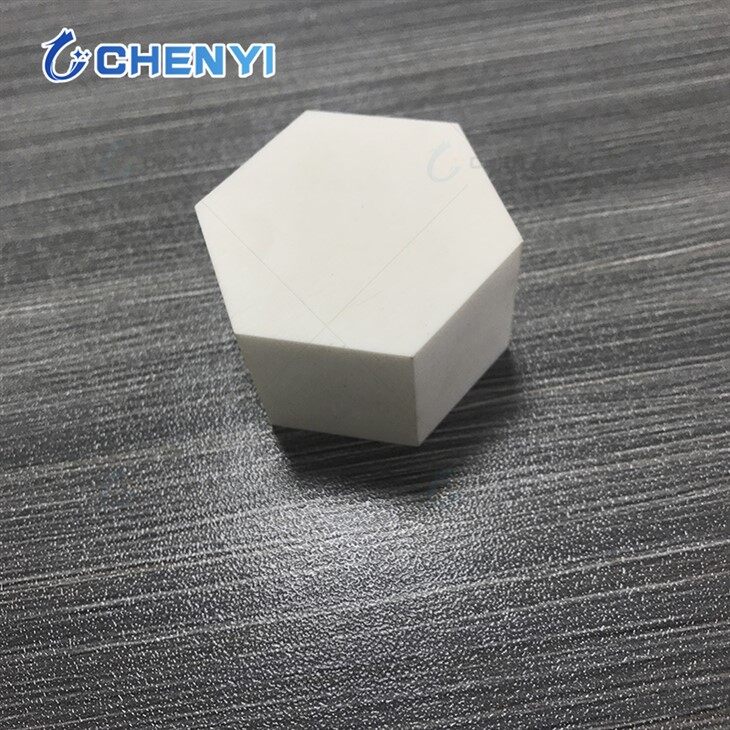
Alumina is known for its exceptional wear resistance, and the addition of zirconia further enhances this property. ZTA ceramic exhibits a low coefficient of friction and high resistance to abrasion, making it perfect for applications where the ceramic may be in contact with other materials and subjected to wear.
Corrosion Resistance
Both zirconia and alumina are highly resistant to corrosion, and the combination of these materials in ZTA ceramic results in a ceramic that is resistant to a wide range of chemicals and environments. This property makes ZTA ceramic suitable for use in various industries, including chemical processing, oil and gas, and mining.
Thermal Stability
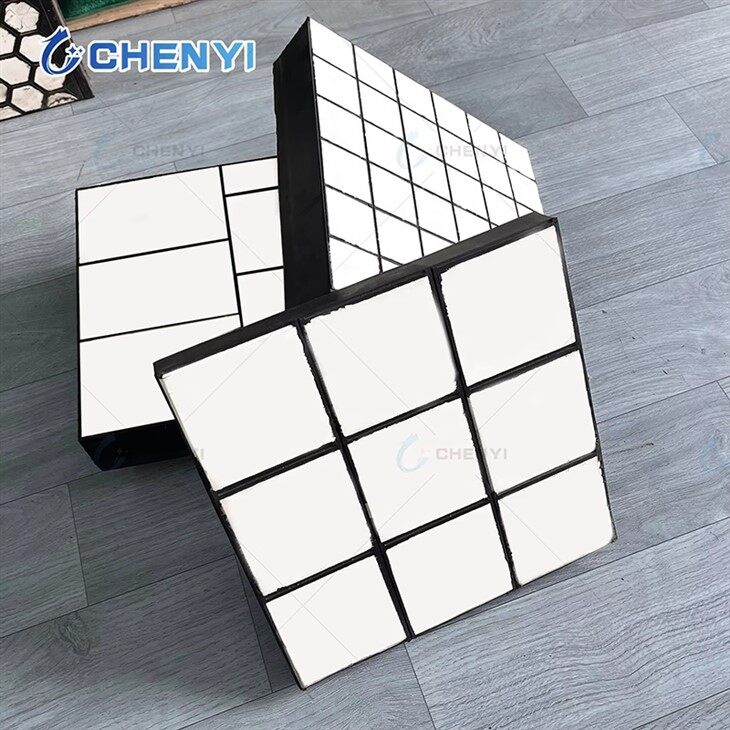
ZTA ceramic has a high melting point of around 2200℃, making it suitable for use in high-temperature applications. Additionally, the material exhibits low thermal expansion, ensuring that it maintains its dimensions and properties during thermal cycling.
Electrical Properties
ZTA ceramic is an excellent electrical insulator, with a high dielectric strength and low dielectric loss. This property makes it suitable for use in electronic and electrical applications where high-voltage insulation is required.
Zirconia toughened alumina (ZTA) is a high strength ceramic used in a variety of extreme environmental conditions. The ceramic of zirconia in a continuous matrix of alumina has generally been found to have superior fracture toughness, but at the expense of mechanical strength. The ability to obtain high toughness while maintaining suitable strength has been a major concern of the art.
The zirconia is of a 2 to 15 micron average agglomerate size, whereas the alumina is ground to the submicron range. The microfissures in the matrix are created by the interdispersed zirconia particles undergoing a phase transition (and concomitant volume expansion) from the metastable tetragonal crystalline form to a stable form upon cooling from sintering to room temperature. However, this increase in fracture toughness from the microfissures causes a decrease in flexural strength. This process also relies on time and energy-intensive grinding to obtain the desired particle sizes.
The zirconia gel was formed from zirconyl alkanate and peptized alumina monohydrate.The process of the patent involves a flash evaporation in a specifically designed high temperature flash furnace to obtain extremely fine zirconia particles which are naturally stable in the tetragonal form (less than 0.2 μm). The extremely fine grained particles are centrifuged and dried to remove the water used in the rapid quench after the flash evaporation. There is no discussion of the agglomerate size, however. The process is complex, requires fine scale turbulent atomization, and the product cannot be handled easily.
A precursor zirconia salt of a nitrate or an oxychloride with additive amounts of stabilizer salts or oxides is co-precipitated with aqueous ammonia. The thus precipitated powders are made anhydrous by azeotropic distillation using added amounts of an organic solvent. Residual organic solvent is removed by drying at atmospheric pressure at 150° C.
The precipitate is dried, washed with water, and dried again. The object was to avoid filtering problems and yield a sinterable powder. However, the repetitive drying and need for anhydrous ethanol makes the process unacceptable for most industrial applications.
Types of ZTA Ceramic
Ceria Stabilized Zirconia (CSZ)
CSZ exhibits exceptional toughness and durability, particularly in moist and wet conditions. With its impressive flexural and compressive strength, it is an ideal choice for manufacturing sensors, instruments, probes, pumps, and fluid control systems.
CSZ is employed in situations where low temperature degradation is a concern, as it is less susceptible to damage from molecular water and can endure elevated temperature environments.
Fully Stabilized Zirconia Ceramics (FSZ)
FSZ is stabilized using yttrium, a silvery-white, soft, and malleable rare earth metal. It is ideal for high-temperature applications that require resistance to thermal shock, high fracture toughness, and superior corrosion resistance. A distinctive feature of FSZ is its selective permeability to oxygen ions, making it suitable for use in active membrane applications.
As zirconia transitions from monoclinic to tetragonal and then to cubic phases, it experiences a volume expansion that can cause cracking in the ceramic. Incorporating yttrium into the cubic phase helps stabilize it, enabling the material to withstand a broad range of temperatures.
Partially Stabilized Zirconia (PSZ)
PSZ, which has a cream hue, incorporates 10% magnesium oxide (MgO) as a stabilizer. It maintains its high toughness even at high temperatures. The microcrystalline grain structure of PSZ not only boosts its strength but also provides resistance to chemicals and heat.
PSZ items remain resistant to corrosion when exposed to high-temperature fluid streams, including strong acids and alkalis. Essentially, PSZ is chemically stable and boasts outstanding compressive and tensile strength.
A major benefit of PSZ is its ability to be machined into extremely intricate shapes, making it capable of performing functions where metals cannot operate. It is widely used for pump seals for caustic chemicals and friction stressed roller bearings.
Tetragonal Zirconia Polycrystal (TZP)
TZP ceramics exhibit exceptional fracture toughness and hardness at ambient temperatures, along with impressive corrosion resistance at high temperatures. They are predominantly used in medical applications such as hip replacements and dental restorations. In industrial settings, TZP serves as a thermal barrier coating for fuel rod claddings.
Applications requiring TZP demand a material with exceptional strength, hardness, and a flawless microstructure. TZP's thermal expansion coefficient is comparable to that of iron and iron-based alloys. Due to its remarkable fracture toughness, it is often termed "ceramic steel."
Transformed Toughened Zirconia Ceramics (TTZ)
TTZ is known as "ceramic steel" because of its behavior under stress, which resembles that of steel rather than traditional brittle ceramics. The transformation toughening of zirconia ceramics utilizes martensitic phase transformation to alter the stress distribution within the material. This phase change enhances tensile stress and counters applied stress. When subjected to tension, zirconia ceramics undergo a phase transformation that expands the ceramic's volume and reduces local stress, thereby inhibiting crack propagation and improving the material's toughness.
TTZ is frequently used in ceramic knives, which are twice as hard as conventional steel knives and feature ultra-sharp blades, making them ideal for precise and delicate cutting tasks.
Comparison of ZTA Ceramic Vickers Indentation Fracture Toughness
Alumina ceramics (Al2O3) displays excellent mechanical properties highly demanded in various fields of application. However, low fracture toughness (KIC) property of the alumina ceramics limits their functionability such as heavy-duty forming tools and refractories. Adding a second composition, yttria stabilized zirconia was aimed to improve the KIC property of alumina ceramics, producing a zirconia toughened alumina (ZTA) ceramics composite.
Vickers indentation technique was employed in this work to determine the hardness and KIC of ZTA ceramics as it requires only a small area of samples surface to be tested and is cost effective. ZTA ceramic composite was indented with 1 kgf load, three indentations each. The average hardness from the Vickers hardness testing of ZTA was recorded and the crack length was measured using scanning electron microscope (SEM). There is a wide variety of empirical equations available to determine the KIC for Vickers hardness test, however most of the equations are said not to be in a good agreement with the KIC value obtained from three point bending test. Thus, hardness and crack length parameters were incorporated in the various empirical equations available to measure the fracture toughness value. It was shown that the crack propagation follows Palmqvist model, and Eq. 4 (KIC=0.0134 (E/Hv)1/2 (P/c3/2)) is the most suitable in determining the KIC of ZTA.
As with wood floors, the best way to avoid cracks is to install an anti-fracture membrane. Isolation and uncoupling membranes work, as do liquid-applied coatings or synthetic fabrics for use over concrete. Some additional details to consider:
Before using a liquid-applied or peel-and-stick membrane, let relative humidity drop below the required percentage as specified by the manufacturer, typically around 80 to 90 percent. This usually takes about 28 days and can be confirmed by drilling a hole in the slab and inserting a moisture probe per ASTM F2170.
With a liquid-applied membrane, thickness correlates directly to quality, so it's a good idea to have quality assurance procedures in place that ensure that the membrane is applied at the recommended thickness.
Dead spots under tile sound hollow when walked on and could signal that moisture coming up from the slab is causing the thinset mortar to release. An under-slab vapor barrier and a membrane between the slab and tile should prevent this.
When installing anti-fracture membrane over a slab, use a continuous membrane instead of just treating control joints in the slab.
Where tile meets a wall or other floor material, leave space for expansion and finish it with a shoe mold or baseboard.
FAQ
Zibo Chenyi Advanced Materials Co., Ltd. is one of the most professional zta ceramic manufacturers and suppliers in China, specialized in providing high quality customized service. We warmly welcome you to buy durable zta ceramic for sale here from our factory. For price consultation, contact us.
best-selling ceramics, ceramic cookware, ceramic tableware