


Zibo Chenyi Advanced Materials Co., Ltd. is one of the leading manufacturers and suppliers of alumina ball in China, also supports customized service. If you're going to buy CE approved alumina ball made in China, welcome to get quotation from our factory. Quality products and low price are available.
Zibo Chenyi Advanced Materials Co., Ltd is a high-tech enterprise including scientific research, manufacture and trading. We have a high quality research team and experienced design, production & fabrication team, also had established a close cooperative relationship with scientific research institutions and institutions of universities and colleges. Our company have been always working on the technology development, product design & manufacture, and site operation for the wear resistant materials and carbon fiber products to provide customers with good quality products and perfect solution.
Why Choose Us
Our Factory
We own full set of advanced production equipment, with advanced production technology and raw materials in domestic and abroad to provide tailor-made solutions for each customer.
Our Product
Rubber ceramic liner, polyurethane ceramic liner, ceramic pulley lagging, ceramic lined pipe, alumina ceramic product, silicon carbide product, ZTA product and other wear resistant product.
Our Certificate
ISO9001, 3 patents, UDEM, TUV.
Production Market
Australia, America, Germany, Japan, Kazakhstan, Italy, Belgium,UK, Denmark and other marketing.
Product Application
Coal-conveying system, coal pulverizing system, dust removing system, dust disposing system and mineral processing system.
Our Service
Various high-quality wear-resistant materials are available for selection, scheme design and production, on-site construction guidance. Very comprehensive after-sales support.
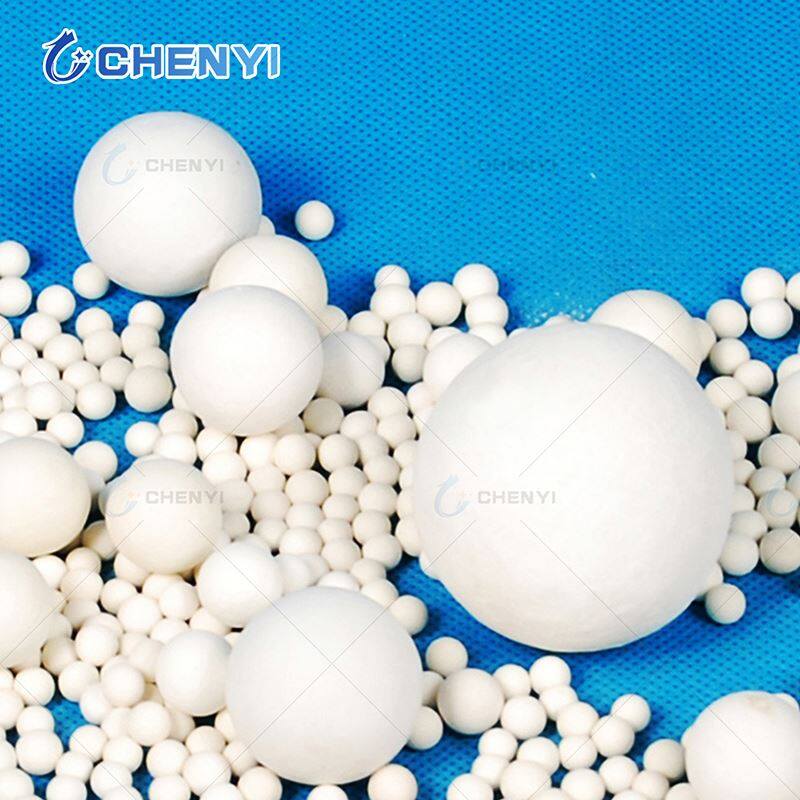
Ceramic Grinding ball is the grinding body of ball mill, pot mill, vibration mill and other fine grinding equipment. It has the advantages of high hardness, large volume density, corrosion resistance and so on. Its crushing efficiency and wear resistance are better than ordinary nodules and natural cobblestones.
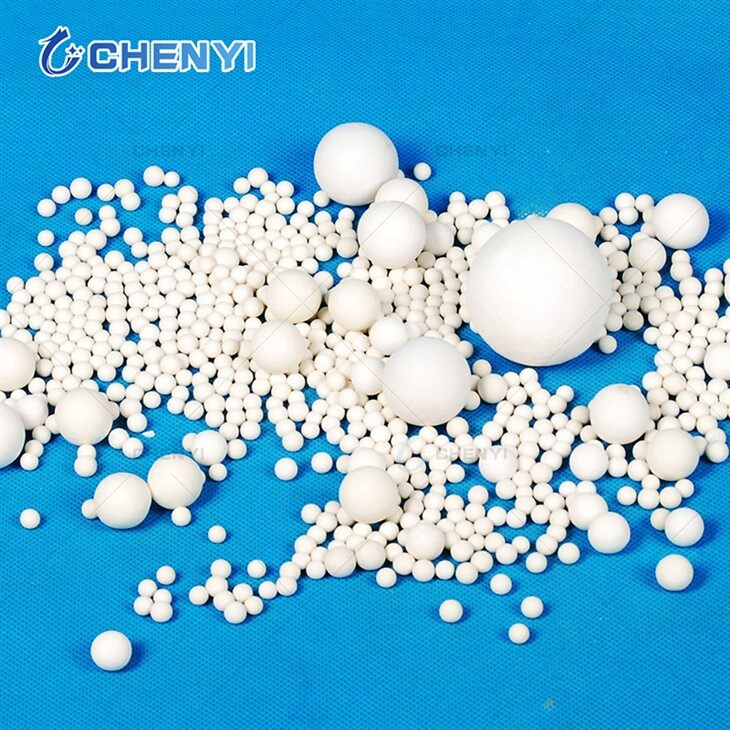
They are the perfect high-efficient grinding media for grinding glaze, pigment, ceramic materials, and various mine ore powder, they are widely used in ceramics, cements, paints, refractories, inorganic mineral powders industries.
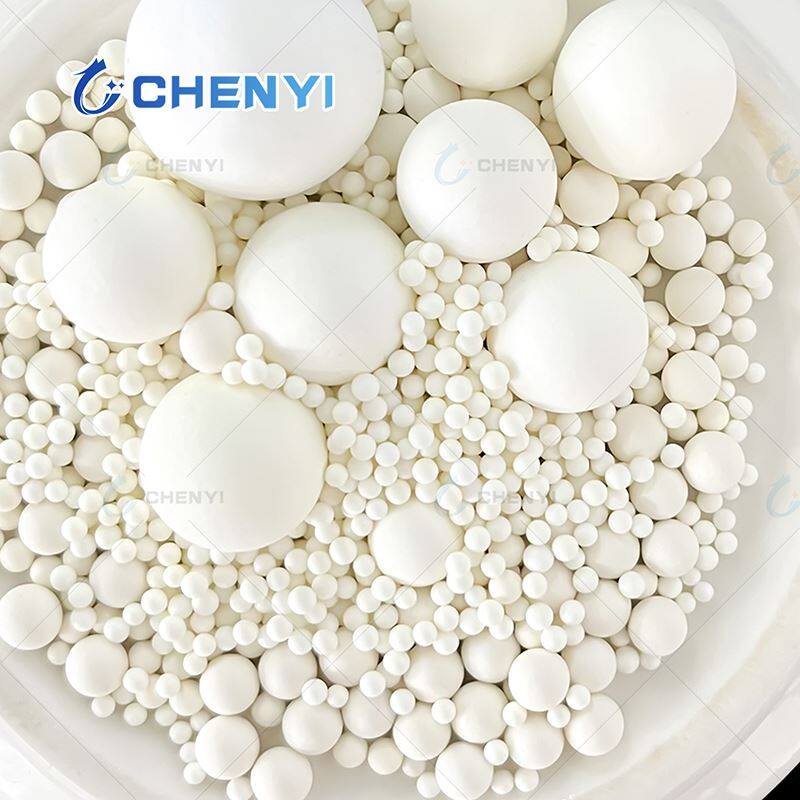
They are the perfect high-efficient grinding media for milling glaze/frit, pigment, ceramic materials, and various mine ore powder, they are using ceramics, cements, paints, refractories, inorganic mineral powders etc.
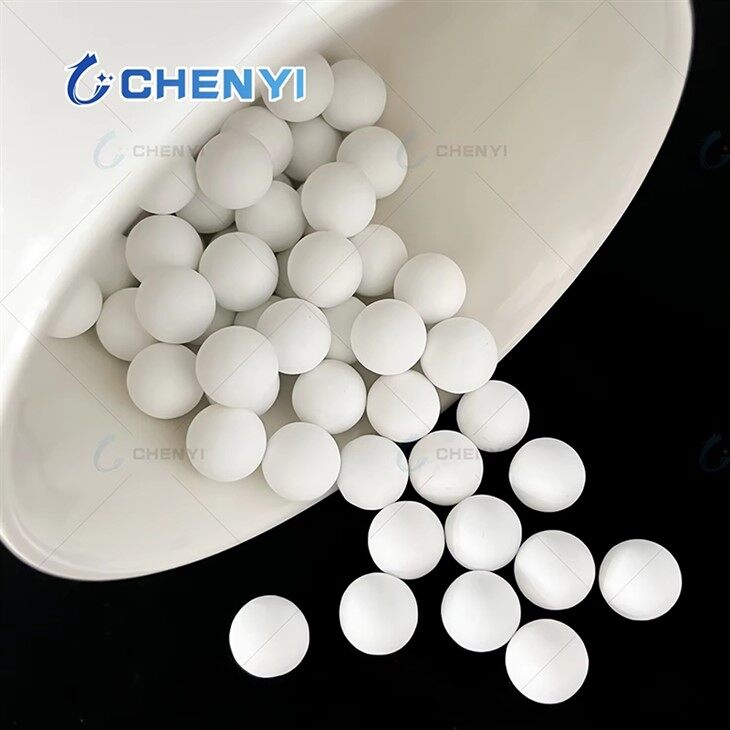
Alumina ball is applied for dry grinding , wet grinding ,mineral grinding , quartz grinding , lineston grinding , iron ore grinding , cement grinding , ceramics plants grinding , pigment grinding , mineral ore grinding , breaking platns.
Alumina balls are used to remove moisture and impurities in the air. Their primary building component is alumina, which is used by several industries to safeguard products against water and moisture. Alumina ball is featured by high density and hardness, low wear lost, corrosion-resistance etc. They are the perfect high-efficient grinding media for grinding glaze, pigment, ceramic materials, and various mine ore powder, they are widely used in ceramics, cements, paints, refractories, inorganic mineral powders industries.
Advantages of Alumina Ball
Optimal Grinding Efficiency
When dealing with high-viscosity materials, achieving the desired particle size distribution is paramount. Ceramic alumina balls possess a unique combination of hardness and toughness, enabling them to effectively grind and disperse the materials. Their smooth surface minimizes wear on the equipment while ensuring consistent and efficient grinding.
High Wear Resistance
The abrasive nature of high-viscosity materials can quickly degrade equipment and grinding media. However, ceramic alumina balls are engineered to withstand abrasion, resulting in longer lifespans and reduced maintenance costs. This wear resistance makes them a cost-effective choice for processing abrasive materials over extended periods.
Uniform Mixing
Homogeneous mixing is essential to avoid inconsistencies in the final product. Ceramic alumina balls facilitate uniform mixing by efficiently agitating the high-viscosity materials. Their spherical shape and high-density composition ensure thorough blending, preventing sedimentation and ensuring product uniformity.
Reduced Contamination
Contamination of processed materials is a significant concern in industrial settings. Ceramic alumina balls are inert and chemically stable, minimizing the risk of contamination during the processing of high-viscosity materials. This feature is particularly crucial in industries such as pharmaceuticals and food processing, where product purity is paramount.
The Difference Between Alumina Ball and High Alumina Ball
Absorption capacity. High alumina ball is also called alumina ceramic ball, alumina grinding ball, ceramic ball, etc. It is an inert ball with no voids inside and has good wear resistance, corrosion resistance, and high-temperature resistance.
The firing temperature of alumina balls is 350-600 degrees celsius, and the firing temperature is low. After firing, the unique porosity is formed, so that it has good adsorption capacity. The firing temperature of the high alumina ball is 1300-1500 degrees celsius. The high temperature sinters the material and loses its activity to increase its strength and wear resistance. High alumina balls are mainly used in the grinding industry, generally suitable for ball mills to grind powder materials.
The forming process of alumina balls is formed by discs, generally with a diameter of 3-5mm. Compared with high alumina balls, the spheres are smaller and the output is larger. High-alumina balls with larger sphere diameters are generally formed by isostatic pressing process, and smaller spheres are generally formed with disc rolling.
Alumina balls have a relatively large bulk density and many internal voids. High-alumina balls can increase the bulk density, and the higher the bulk density, the better its wear resistance.
How Alumina Ball to Remove Fluoridation
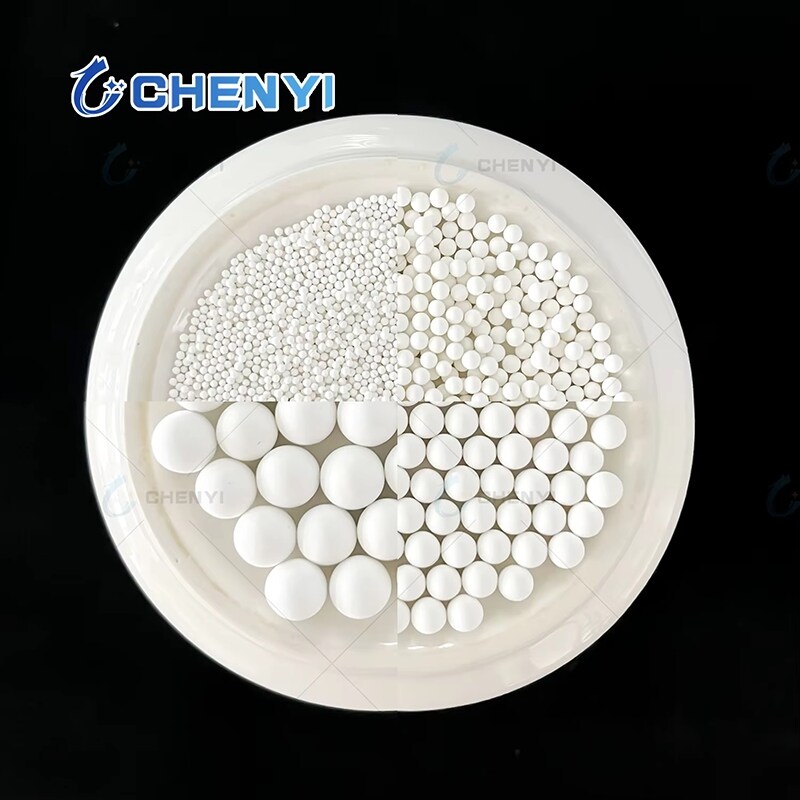
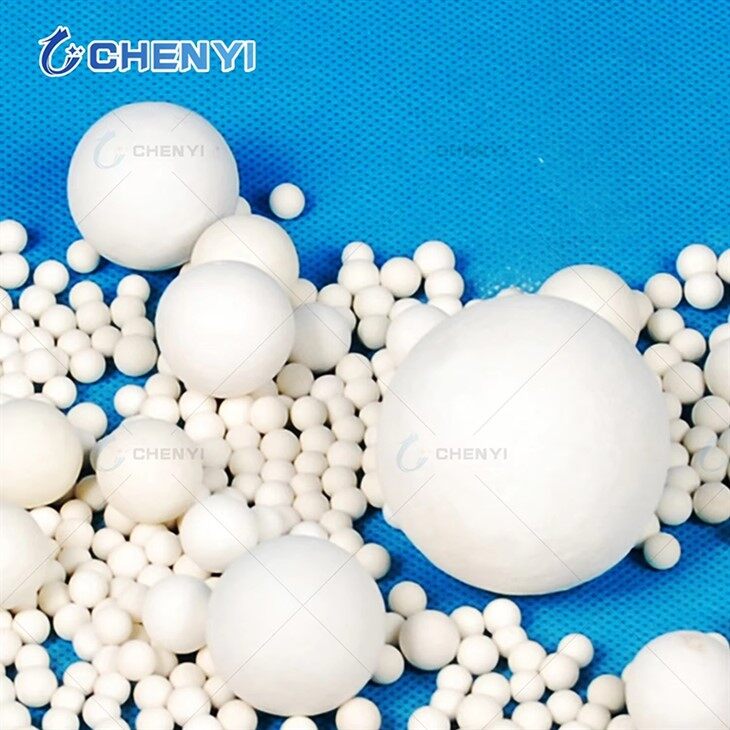
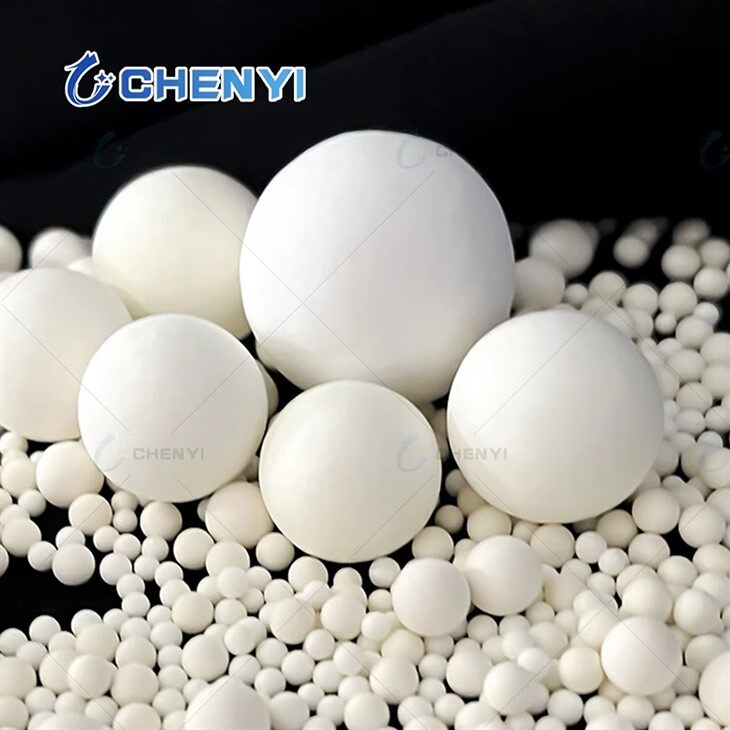
Alumina ball is an effective method for removing fluoride from water due to its unique adsorption properties. When water containing fluoride comes into contact with alumina ball, the fluoride ions adhere to the surface of the alumina particles. The adsorption process occurs primarily through chemisorption, where fluoride ions chemically bond with the alumina surface. Aalumina ball has a high surface area and a network of pores that enhance its capacity to capture fluoride ions from water. To use alumina ball for fluoride removal, the following steps are typically involved:
Selection and preparation
Choose a high-quality alumina ball specifically designed for fluoride removal. Ensure that it meets regulatory standards and certifications, if applicable. If necessary, prepare the alumina ball according to the manufacturer's instructions.
Bed preparation
Create a bed or column of alumina ball by filling a filtration vessel with the alumina beads. The vessel can be made of different materials such as stainless steel or plastic, depending on the application.
Contact time
Allow the water containing fluoride to pass through the alumina ball bed. The contact time between the water and the alumina is crucial for effective adsorption. Longer contact times generally result in a higher degree of fluoride removal.
Flow rate
Control the flow rate of water through the bed to ensure optimal performance. A slower flow rate allows for better contact between the water and the alumina surface, increasing the adsorption efficiency.
Monitoring
Regularly monitor the fluoride levels in the treated water to determine the efficiency of the alumina ball bed. Periodically test the alumina to determine its capacity and replace it when needed.
Regeneration or replacement
Over time, the alumina ball bed may become saturated with fluoride ions and lose its effectiveness. Depending on the specific product, the alumina bed can be regenerated using a solution to release the adsorbed fluoride or replaced entirely with a fresh batch of alumina ball.
Applications Of Alumina Ball For Gas & Air Purification
Alumina ball is a highly adsorbing, porous, granular material with a high surface area and adsorptive capacity. Al2o3 which has been chemically activated through a controlled production process is used in a wide range of industrial applications due to its highly efficient desiccant and adsorption properties.
In the petrochemical industry
Various processes involve the processing and cleaning of gases and liquids in the petrochemical industry. Alumina balls help remove moisture, hydrogen sulfide, and other contaminants and impurities from a wide range of gases and liquids to maintain the purity of the final petrochemical products. Alumina plays an essential role in the process of natural gas drying, as well as in the cleaning and purification of petrochemical products and by-products.
For natural gas drying
Natural gas is one of the most important energy sources and needs to be processed properly before usage in various applications. Alumina ball is widely used in natural gas dehydration, where it effectively removes moisture from natural gas to help prevent corrosion and freezing of pipelines and other equipment. It acts as an adsorbent and adsorbs water vapor, helps maintain optimal performance and functioning of the gas processing facilities, and improves the processes of natural gas distribution systems.
In hydrogen purification
In various industries like petroleum refining, chemical manufacturing, and electronics, alumina is commonly used in the purification process of gases to eliminate impurities, and contaminants and adsorb acidic gases, including hydrogen sulfide, sulfur dioxide, and other organic compounds from gas streams in the natural gas industry and petrochemical industry.
These impurities can lead to corrosion, affect downstream processes, and affect the quality and performance of finished products. The high surface area and high porosity of alumina allow for selective adsorption of gases and vapors to improve product purity and reduce environmental emissions.
In air purification
In addition to its gas purification applications, is also highly suitable for alumina for air purification applications as it helps adsorb moisture and volatile organic compounds that can lead to corrosion, malfunctioning of parts, and damage to the equipment. Alumina plays a critical role in the removal of contaminants and the effectiveness and functioning of air handling systems, industrial air dryers, and compressed air systems.
For water treatment
Though alumina is used in the purification of various liquids to remove contaminants and impurities from industrial liquids, it is a great adsorbent that is particularly used in the removal of fluoride and arsenic from drinking water. The porous structure of alumina and its high surface area allows it to adsorb these harmful substances effectively, providing clean and treated water that meets the regulatory compliance and standards of water treatment. Aluminum is also used in municipal water treatment plants and home filtration systems to provide clean drinking water and remove the present high fluoride content.
Handling Precautions for Alumina Balls
Absolutely. Alumina balls, while robust and versatile, do require certain handling precautions to ensure their integrity and longevity. These precautions contribute to safe usage and prevent damage that could compromise their performance. By following the guidelines outlined below, you can optimize the handling of alumina balls in your applications.
Alumina balls should be handled and stored with care to prevent breakage or contamination. Here's what you need to keep in mind:
Gentle Handling: Avoid dropping or mishandling the balls, as excessive force can lead to chipping or cracking.
Clean Environment: Handle the balls in a clean and controlled environment to prevent contamination, which could impact their properties.
Avoid Direct Impact: Minimize direct impact or contact with hard surfaces to prevent potential damage.
Storage Conditions: Store the balls in a dry and cool environment, away from direct sunlight and extreme temperature fluctuations.
When transporting alumina balls, take the following precautions:
Secure Packaging: Use appropriate packaging materials, such as foam or cushioning, to prevent movement and potential breakage during transit.
Labeling: Clearly label packages containing alumina balls to alert handlers to the fragile nature of the contents.
Avoid Mixing: During transportation, ensure that the balls are not mixed with other materials that could cause abrasion or damage.
While using alumina balls, consider the following:
Compatible Environments: Ensure that the balls are used in environments that are chemically compatible to avoid reactions that could affect their properties.
Appropriate Equipment: Use equipment that is designed for alumina ball applications to ensure optimal performance.
Avoid Extreme Forces: Avoid subjecting the balls to excessive forces, pressure, or impacts that could lead to breakage.
Proper cleaning and maintenance practices contribute to the longevity of alumina balls:
Gentle Cleaning: Clean the balls with mild solutions and soft materials to avoid scratching or damaging the surface.
Regular Inspection: Periodically inspect the balls for signs of wear, damage, or contamination, and replace them if necessary.
Size
This will depend on the size of your equipment and the specific process you are using. Generally speaking, larger alumina balls are more effective for coarse grinding, while smaller alumina balls are more suitable for fine grinding and achieve higher accuracy. Element. Alumina balls are composed of different contents of alumina, which directly affects their hardness and wear resistance. The higher the aluminum oxide content, the harder and more wear-resistant the ball will be. Consider the type of material you want to grind and look for balls with the appropriate aluminum oxide content to ensure optimal performance and durability.
Shape
While traditional spherical balls are effective for most applications, other shapes may be better suited for specific processes. For example, cylindrical or rod-shaped balls are more suitable for grinding materials that require higher precision, while irregularly shaped balls can be used for some special applications.
Surface area
The greater the surface area, the greater the contact between the ball and the material being ground, resulting in better performance and efficiency.
Quality
Inferior quality alumina balls can cause reduced performance, premature wear, and potentially costly equipment damage.
Hardness Testing Methods for Ceramics Alumina Ball
Vickers Hardness Test
The Vickers hardness test is performed to measure the hardness of ceramics or other materials by measuring the size of the indentation left by the indenter. It works well for small parts and thin sections. It uses a diamond indenter and a light load to produce an indentation on the material being tested. The hardness value can also be the measure of the depth of indentation caused by the indent.
Knoop Hardness Test
The Knoop hardness test is a micro-hardness test for measuring the hardness of very brittle material and thin sheets. Typically, a small indentation is used for testing purposes. A diamond tip, which is pressed into the surface of the ceramic, is used to cause the indentation, and the size of the indentation is measured using a light microscope with a measuring device.
What Do We Need to Make Alumina Balls
That the main component of alumina balls is alumina, and a rough process is to form alumina powder one by one and calcinate one by one. From the perspective of the process, the production of alumina balls involves raw materials, processes, and equipment.
The equipment required for the production of alumina balls includes static isostatic press, ball rolling machine, tunnel kiln, etc. It mainly produces corundum grinding balls, high alumina balls, alumina balls, heat storage balls, refractory balls, porcelain balls and other products. It has 3 large ball mills, 6 small ball mills, rotary kilns, tunnel kilns, and inverted flame kilns. The high-quality alumina powder and the alumina ball made by isostatic pressing grinder have high density.
The aluminum hydroxide produced by the Bayer process is then ground and finely processed into balls. The balls are sintered at a high temperature in a kiln to make activated alumina balls or other types of activated alumina series products. We purchase raw materials for production according to the user's indicators. The purchased raw materials are first screened, processed into powder, etc., then enter the silo, and then made into ball billets, which are calcined in a tunnel kiln.
At present, the main forming methods are dry pressing, isostatic pressing, and roll forming; dry pressing has simple operation and low investment. Because of uneven pressure, the internal distribution of the blank is uneven, which affects the comprehensive performance of the grinding media. The isostatically pressed body has the characteristics of high strength, high density and uniform internal. Rolled balls have the characteristics of production equipment, raw materials, simple operation, good sphericity, easy sintering, and low preparation cost.
FAQ


