

The pipeline composed of an outer layer of pressure bearing carbon steel matrix and an inner layer of basalt cast stone microcrystalline layer is not a simple and inexpensive substitute. It represents a material route that relies on natural volcanic rock resources and controlled crystallization to form a dense microcrystalline structure. Under specific working conditions, it forms a unique balance point between wear resistance, corrosion resistance, surface self-lubricating, operating resistance, and full life cycle cost. Only by understanding its forming mechanism, performance boundaries, failure modes, and the logic of choosing between it and other wear-resistant pipes can we break out of the single evaluation framework of "wear-resistant materials only look at hardness".
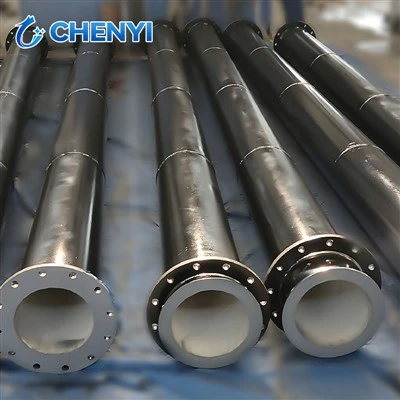
1, Material origin: from natural basalt ore to cast stone lining
The lining substrate of Basalt Lined Pipe is taken from natural basalt, a basic volcanic eruption rock, mainly composed of pyroxene, basic plagioclase, olivine, and rich in components such as silicon dioxide, iron oxide, magnesium oxide, and calcium oxide. Unlike artificially synthesized high-purity ceramics such as alumina and silicon carbide, basalt casting stone is essentially a microcrystalline rock material with controlled crystallization. After crushing and screening the ore, it is mixed with a small amount of melting and crystallization adjustment additives and melted at a high temperature of 1200-1300 ℃. Then, it is formed on the inner wall of the steel pipe using centrifugal casting technology, and crystallized under a precise temperature controlled annealing system to suppress coarse grains and pores, forming a cast stone layer mainly composed of pyroxene, with fine grains and extremely low porosity.
Centrifugal molding is the core process feature of this pipe material. Molten basalt is uniformly spread and densified on the inner wall of a high-speed rotating steel pipe by centrifugal force, naturally forming an inner lining layer; After cooling and crystallization, a transition buffer layer is generally reserved between the cast stone layer and the steel pipe to release thermal stress and avoid the risk of thermal shock cracking caused by direct hard bonding between the rigid lining layer and the carbon steel substrate. The finished structure is divided into three layers: the outer layer is made of carbon steel, which bears system pressure, external loads, and welding and installation strength; Intermediate buffer transition layer, dissipating thermal expansion difference; The inner layer of basalt casting stone microcrystals is subjected to direct erosion, abrasive wear, and chemical medium erosion.
This origin determines its underlying characteristics: raw materials are derived from natural minerals, without the need for high-purity powders, high-temperature sintering kilns, expensive sintering aids, and naturally low raw material costs; However, at the same time, its composition fluctuations are more affected by the mineral source, and the crystal quality is highly dependent on the melting temperature, centrifugal speed, and annealing curve. The process window is narrower than that of industrial fine ceramics, and it is also more prone to hidden defects such as bubbles, microcracks, and grain segregation.

2, Core feature: Advantages and innate performance boundaries
(1) Highlight advantages
Firstly, excellent anti-wear performance. The Mohs hardness of basalt casting stone can reach 7-8, with high microhardness and a dense microcrystalline structure with almost no connected pores. For media mainly characterized by sliding wear and low angle erosion, such as fine-grained coal powder, tailings slurry, fly ash, slag, and sand and gravel, their wear resistance performance is superior to ordinary wear-resistant welding and high chromium cast iron, and is close to ordinary alumina ceramics in many fine-grained slurry conditions. After sintering and forming the inner wall of the cast stone, the surface smoothness is high, and it has a certain self-lubricating effect. The pipeline transportation resistance is lower, and the pump consumption is smaller at the same flow rate, which can reduce the system energy consumption in the long run.
Secondly, broad-spectrum chemical corrosion resistance. Except for hydrofluoric acid and high-temperature molten strong alkali, basalt casting stone has stable corrosion resistance to the vast majority of inorganic acids, weak acids, salt solutions, and weak alkali slurries. It does not undergo electrochemical corrosion like carbon steel, nor does it swell and age like rubber lining in high temperature, oil medium, and strong oxidation environment. In working conditions such as mine tailings, coal washing wastewater, chemical slurry, and power plant ash water, where both solid and liquid coexist and have the coupling effect of wear and corrosion, the "synergistic wear and tear damage" is significantly suppressed. This is also the key advantage that distinguishes it from welded steel pipes and wear-resistant coatings.
Thirdly, the compatibility between pressure bearing and installation is connected by the outer carbon steel pipe. Individually cast stone itself is extremely brittle and cannot withstand tensile stress, impact, and welding, while composite structures entrust all pressure bearing, lifting, and welding to the steel pipe matrix. Pipe materials can be cut (limited area), flange connected, welded and docked, and can be matched with special-shaped parts such as elbows, tees, reducers, and reducers. They are compatible with conventional industrial pipeline construction systems and do not require special bonding and assembly processes. This is similar to the on-site installation logic of surface mount ceramic pipes and ceramic composite pipes.
Fourthly, there is a clear cost advantage throughout the entire lifecycle. The purchasing unit price is generally lower than that of alumina and silicon carbide lined pipes; As long as the working conditions match, the lining life is long enough, the replacement frequency is reduced, and the downtime maintenance losses are reduced accordingly. Especially suitable for long-distance, large-diameter, continuous transportation pipelines, with controllable self weight of a single pipeline and higher transportation and lifting costs than thick walled high chromium cast iron fittings.
(2) Shortcomings and boundaries that cannot be ignored
The most fatal weakness of basalt cast stone lining comes from brittleness and thermal stability. Its fracture toughness is much lower than ZTA and silicon carbide, and its ability to resist high-speed impact of large particles is weak. When there are large pieces of ore and coarse angular particles in the medium, high angle impact, and concentrated impact points, the cast stone layer is prone to edge collapse, falling off, and local peeling. Once the local lining layer is damaged, the medium will quickly wash away the transition layer and steel pipe matrix, forming perforation and leakage in a short period of time.
Thermal shock stability is the second red line. There is a significant difference in the thermal expansion coefficient between basalt cast stone and carbon steel. Although a buffer layer is set up, severe temperature fluctuations and sudden hot and cold shocks can still induce microcrack propagation. The recommended range for regular use is roughly between -40 ℃ and 250 ℃, and frequent sudden cooling and heating are strictly prohibited; Exceeding the upper temperature limit or experiencing severe fluctuations in the medium temperature can lead to a sharp increase in the risk of lining cracking. This is also the fundamental reason why it is difficult to use for transporting high-temperature dry slag and hot mineral materials.
In addition, it has a clear exclusion zone for strongly corrosive media: hydrofluoric acid and concentrated hot strong alkali will corrode the silicate crystal skeleton, causing slow dissolution and loose powdering of the lining layer; At the same time, non-destructive testing of the thickness uniformity, internal pores, and microcracks of cast stone lining is more difficult than that of surface mount ceramics. Quality control relies on factory process control, and the performance variability of products from different manufacturers and mineral sources is relatively large. When selecting, it is not enough to simply benchmark the indicators of ceramic pipes, and the manufacturer's sample wear test data must be used as the standard.
Another easily overlooked engineering pain point is the difficulty of repair. Once local peeling and cracking occur, unlike wear-resistant coatings that can be repaired on site, and unlike surface mount ceramics that can be replaced locally with ceramic tiles; Basalt cast stone lined pipelines are generally formed as a whole, and after partial failure, they mostly need to be replaced as a whole section. The failure of high erosion positions such as tees and elbows is particularly prominent.
3, Typical application scenario: Find the most suitable working condition for it
The value of Basalt Lined Pipe is concentrated in scenarios involving fine particles, medium to low impact, abrasion coupling, and continuous transportation; In environments with high impact, high temperature alternation, and strong hydrofluoric acid/concentrated alkali, active avoidance should be taken.
The mining industry is the main application market: tailings conveying pipelines for metallic and non-metallic ores, flotation slurry pipelines, and concentrate slurry conveying. Tailings particles are fine and mainly subject to sliding friction and wear, while also containing sulfates and various salt ions, coupled with wear and corrosion. Basalt cast stone lining can resist both at the same time, and its service life is several times longer than ordinary carbon steel and rubber lined pipelines. The coal washing plant is also a mature track: coal slurry, heavy medium suspension, fly ash transportation, medium particles are fine, impact force is mild, pipeline length and continuity are strong, sensitive to operating resistance, and the low resistance, wear and corrosion resistance characteristics of basalt lining can play an advantage.
In the field of electricity and solid waste: hydraulic ash removal and ash slurry transportation for coal-fired power plants; Transportation of fine aggregates, sludge, and incineration fly ash slurry from construction waste. This type of medium has strong abrasion resistance, stable flow rate, and few super large hard objects, which is very suitable for its performance window.
Building materials and chemical industry: Wet transportation of sand and gravel aggregates, cement slurry, slag slurry, as well as chemical slurry and salt slurry pipelines for some non hydrofluoric acid systems. In processes such as dry transportation of large ore blocks after coarse crushing, high-pressure air transportation of coarse particles, and frequent cold and hot switching, ZTA, silicon carbide, or high chromium wear-resistant castings are usually preferred.
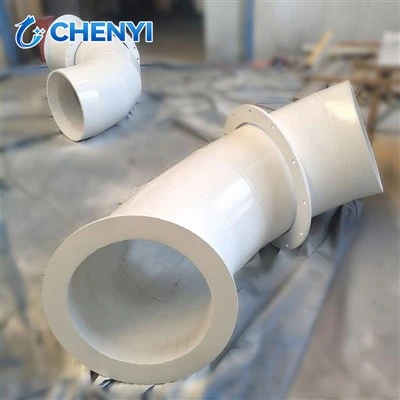
At the same time, in terms of pipeline network design, a mature matching approach has been formed in engineering: the direct pipe section should prioritize the use of basalt cast stone lining to control costs; Local high impact locations such as elbows, tees, reducers, and material flow impact points are upgraded to alumina, ZTA, or silicon carbide lining pipe fittings, forming a combination scheme of "straight pipe cost reduction and node toughness", balancing investment and reliability.
4, Horizontal comparison: positioning basalt lining pipes in wear-resistant pipe matrix
Placing the Basalt Lined Pipe into the wear-resistant lining system makes it easier to see the logic of trade-offs:
-Compared with ordinary welded wear-resistant steel pipes, cast stone has better corrosion resistance and finer particles have stronger wear resistance; But the weld overlay has better toughness, impact resistance, and thermal shock resistance, making it suitable for coarse-grained impact conditions.
-Compared with surface mounted alumina ceramic tubes, alumina has better toughness, stronger impact resistance, and more stable quality control, but the procurement cost is higher; Basalt has similar wear resistance and lower cost under fine slurry conditions, but it has greater brittleness and higher dispersion.
-Compared with SiSiC silicon carbide lined steel pipes, silicon carbide has superior hardness, thermal conductivity, thermal shock resistance, and strong corrosion resistance. It can be used for higher temperatures and more severe corrosion, but it is expensive and belongs to high-end working conditions selection; Basalt is a mid-range cost-effective route.
-Compared with rubber lined pipelines: Rubber has good impact resistance, but it is not resistant to high temperatures, organic solvents, and is prone to aging, with a lower upper limit of wear resistance; Basalt has a higher high temperature resistance range, does not age, but has greater brittleness.
So the positioning of basalt lined pipelines is not "the strongest wear-resistant", but a balanced solution: when wear is mainly caused by sliding and low angle erosion, with limited impact load and accompanied by corrosion, the project pursues long-distance pipelines to reduce initial investment and pumping energy consumption, making it highly competitive; Once the working condition shifts to strong impact, coarse blocks, and severe temperature fluctuations, its shortcomings will be amplified.
5, Failure mechanism, engineering selection, and future evolution direction
On site failure modes can be classified into four categories: first, impact peeling, where coarse particles collide and cause surface cracking, gradually expanding into falling blocks; Secondly, thermal shock cracks and temperature fluctuations trigger the network propagation of microcracks, causing medium infiltration into the interface and resulting in delamination of the lining layer; Thirdly, interface failure occurs due to poor bonding between the inner lining and transition layer during centrifugal molding, resulting in the detachment of the entire lining layer under pressure pulsation and hydraulic impact; Fourthly, chemical dissolution leads to the destruction of the crystal skeleton and the loosening and pulverization of the lining layer after contact with hydrofluoric acid and high-temperature concentrated alkali.
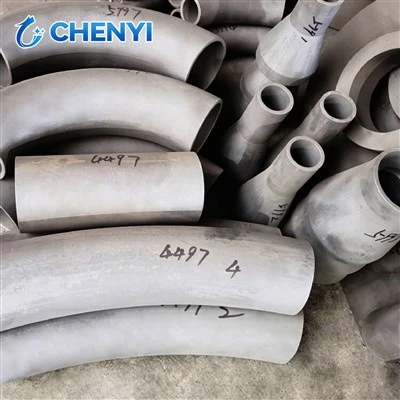
A set of verification checklist should also be established for the corresponding engineering selection logic: confirming the maximum particle size, particle edge angle, impact angle, flow rate, temperature fluctuation range, medium pH, and special components of the medium; Priority should be given to conducting comparative erosion tests on new minerals and media; Reduce sharp bends and direct impact structures in pipeline layout; Upgrade materials at impact points, tees, and bends; Control the thermal shock caused by start stop to avoid pipeline no-load and dry grinding - the lack of slurry lubrication under dry grinding conditions will significantly accelerate the wear rate of the cast stone lining.
From the perspective of material evolution, the development direction of basalt cast stone lining is not to compete with silicon carbide and ZTA for toughness, but to optimize along its own path: by modifying mineral formulas and adjusting nucleating agents, it can improve microcrystalline density and fracture toughness; Optimize centrifugal molding and annealing automation to reduce batch performance dispersion; Develop a composite gradient transition layer to further bridge the thermal expansion gap; Combined with online non-destructive testing solutions, internal microcrack defects can be detected in advance. In addition, under the background of "dual carbon", it relies on natural volcanic rocks, which can reduce energy consumption in powder preparation and high-temperature sintering compared to high-purity ceramics. In resource rich production areas, it has sustained cost and low-carbon advantages.
Basalt Lined Pipe has long been in the "middle zone" of wear-resistant conveying materials: it does not have the stable and controllable high-purity system of industrial ceramics, nor does it have the toughness and impact resistance of metal wear-resistant materials. However, with the dense structure of natural microcrystalline cast stone, it has opened up a route that balances wear resistance, corrosion resistance, low conveying resistance, and economy in the scenario of fine particle abrasion coupled conveying. Excellent selection of wear-resistant pipelines is never about blindly pursuing higher hardness, but about identifying the wear mechanism: distinguishing between sliding wear or impact peeling, steady-state transportation or severe temperature fluctuations, pure wear or combined wear and tear. Basalt cast stone lined steel pipes provide a practical and mature solution for industrial pipelines that mainly rely on fine-grained slurry and steady-state long-distance transportation, but must maintain the boundary of working conditions. Its value lies not in versatility, but in precise matching.
E-mail:bonniejing@zbchenyi.com
Tel/WhatsAPP:+86 13864474677