

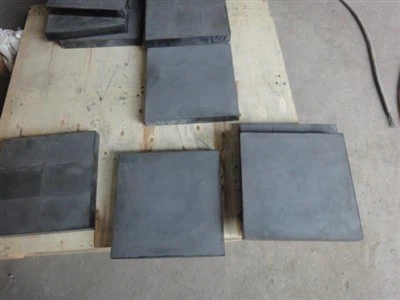
Silicon Nitride Ceramic Square Structural Component
1. Material Foundation: Why Silicon Nitride Excels as a Structural Ceramic
Silicon nitride is a covalently bonded compound with three crystalline polymorphs: α‑phase, β‑phase and γ‑phase. For structural components, β‑Si₃N₄ is the dominant target phase formed during liquid‑phase sintering. Under controlled sintering additives and temperature field, β‑grains grow into elongated, interlocking rod‑like microstructures, forming an in‑situ "ceramic fibre reinforcement" network inside the bulk matrix[sv.sgjl-fi...]. This microstructure is the root cause that distinguishes Si₃N₄ from most oxide ceramics: crack deflection, grain bridging and pull‑out consume fracture energy, lifting its fracture toughness far above alumina.
Square structural components are mostly manufactured via reaction‑bonded silicon nitride (RBSN), gas‑pressure sintered silicon nitride (GPS‑Si₃N₄) or hot‑pressed silicon nitride (HP‑Si₃N₄). RBSN features low shrinkage and high dimensional consistency for large square blocks but with residual porosity and lower strength; GPS is the mainstream for high‑performance square plates and load blocks, delivering full density, high Weibull modulus and stable high‑temperature performance; hot‑pressed grades own the highest strength and toughness but are restricted by mould geometry and higher cost, generally limited to small‑size high‑value square inserts and fixture bases.
The square geometry itself carries special structural significance. Compared with spherical, cylindrical or complex curved parts, square components establish flat contact interfaces, spread compressive loads evenly, simplify tolerance control in X/Y/Z orthogonal directions, and support stacking array, bolt clamping or graphite‑fixture positioning. In ceramic engineering, which is extremely sensitive to tensile stress and stress concentration, flat square contact avoids local peak stress induced by line‑contact or point‑contact, making it one of the most friendly geometric forms for brittle structural ceramics.

2. Core Engineering Characteristics of Silicon Nitride Square Structural Components
2.1 Mechanical properties: high specific strength and ceramic‑grade toughness
Dense GPS silicon nitride typically reaches flexural strength of 700–1000 MPa, fracture toughness of 5–8 MPa·m¹ᐟ², Vickers hardness of 1400–1700 HV and density around 3.2 g/cm³, roughly 40% the density of steel. This creates outstanding specific strength. At room temperature and up to 1200–1300 °C, it retains most of its strength without the creep, softening and yield behaviour seen in superalloys.
It must be emphasized that Si₃N₄ remains a brittle ceramic with no plastic deformation. Its high toughness is relative to other ceramics, not to metals. Square parts will fail catastrophically once tensile stress exceeds the critical threshold. Therefore, qualified structural design for Si₃N₄ square blocks always strives to place the component under pure compression, avoid sharp notches, chamfer all edges and adopt Weibull statistical reliability assessment rather than simple safety factor calculation for metals.
2.2 Thermal performance: the benchmark for thermal‑shock resistance
Silicon nitride has a low coefficient of thermal expansion (~3.5 ×10⁻⁶ K⁻¹), moderate thermal conductivity and high fracture toughness, which together produce excellent thermal shock resistance. Square plates and support blocks can withstand repeated quenching from hundreds of degrees Celsius into cooling media without cracking, a property that alumina and even many SiC grades struggle to match[Fraunhofer...].
This characteristic makes square Si₃N₄ components irreplaceable in cyclic thermal environments: furnace support tiles, hot pressing dies, heat‑shield spacers, and power semiconductor substrate carriers. In high‑end power electronics, high‑thermal‑conductivity modified Si₃N₄ square substrates combine insulation, mechanical support and heat dissipation, outperforming Al₂O₃ in strength and reliability, and outperforming AlN in humidity and thermal cycling stability.
2.3 Tribology and surface behaviour: inherent self‑lubrication and erosion resistance
When sliding against metals or other ceramics under dry, oil‑starved or vacuum conditions, silicon nitride forms a thin silica tribofilm on the contact surface, delivering low friction coefficient and low wear rate. Square liner blocks, guide pads and sliding wear plates take advantage of this feature. Unlike impact‑resistant liners or basalt lined pipes which focus on large‑particle impact and slurry abrasion, Si₃N₄ square structural components target fine abrasive erosion, high‑speed dry friction and corrosive wear, especially where contamination from lubricant is forbidden.
2.4 Chemical stability and dielectric property
Silicon nitride resists most dilute acids, alkalis, molten non‑ferrous metals and oxidizing atmospheres below 1200 °C; it does not react with aluminium, zinc and magnesium melts. It is an excellent electrical insulator with low dielectric loss, which expands its application from purely mechanical structure into electrical isolation and radio‑frequency windows. Square isolation blocks and positioning brackets are widely used in semiconductor thermal processes and high‑voltage power modules.
3. Unique Advantages in Structural Engineering
The value of Si₃N₄ square structural components emerges only when compared with competing material‑shape schemes:
1. **Advantage over metallic square alloy blocks**: lighter weight, no oxidation at high temperature, no seizure under dry friction, immune to electrochemical corrosion, no magnetic interference for precision instruments. The downside is brittleness and high machining cost.
2. **Advantage over alumina square ceramics**: much higher fracture toughness and thermal shock resistance, less prone to chipping under thermal cycling and local compressive impact.
3. **Advantage over zirconia structural blocks**: superior high‑temperature stability; zirconia suffers strength degradation and phase transformation above 400–500 °C, while Si₃N₄ maintains performance above 1000 °C.
4. **Advantage over silicon carbide**: better thermal shock resistance and lower sintering difficulty for medium‑size square structural grades; SiC usually wins in ultra‑high thermal conductivity and oxidation resistance above 1400 °C.
5. **Advantage over composite laminates**: non‑combustible, no outgassing under vacuum or high temperature, dimensionally stable, no resin ageing.
The square form amplifies these strengths: multiple identical square blocks can be standardized, interchanged, array‑assembled, and inspected by simple flatness and squareness metrology. For equipment maintenance, damaged individual square inserts can be replaced without dismantling an entire large lining or structural module, which greatly reduces the life‑cycle cost for continuous‑production industrial lines.
4. Typical Application Scenarios
4.1 Thermal treatment and high‑temperature furnace industrySquare silicon nitride support blocks, setter plates and load bearers are used in sintering furnaces for hard alloys, ceramic tools, powder metallurgy parts and magnetic materials. They carry heavy stacked workpieces under cyclic heating and cooling, resist reaction with sintering atmospheres, and avoid contamination of the green bodies. Compared with alumina setters, they have far longer service life and lower breakage rate during rapid temperature rise and fall.
4.2 Non‑ferrous metallurgy and molten metal contact
Square positioning blocks, flow control baffles and lining inserts for aluminium, magnesium and zinc melting and casting systems. Si₃N₄ is not wetted by these molten metals, so it reduces adhesion, avoids metal contamination and withstands thermal cycling when molten metal flows over the surface. It is a key alternative to boron nitride and sialon in continuous casting and die‑casting hot zones.
4.3 Semiconductor and power electronics manufacturing
Square Si₃N₄ insulating carriers, heating platform support pillars and high‑thermal‑conductivity substrate plates. In wafer thermal processes, plasma chambers and power module packaging, they combine mechanical support, electrical insulation, heat spreading and low‑particle generation. High‑purity GPS silicon nitride minimizes metallic ion release to meet semiconductor cleanliness requirements.
4.4 Precision machinery, bearing and tribological systems
Square guide sliding pads, bearing cage segments, thrust washer blocks and anti‑wear positioning inserts for high‑speed machine tools, wind turbine gearboxes and oil‑free compressor systems. Its self‑lubricating property suits oil‑free, clean or cryogenic working conditions. This is complementary to full silicon nitride rolling balls: square components undertake planar sliding and positioning loads rather than rolling contact.
4.5 Aerospace, energy and extreme‑condition equipment
Lightweight square heat‑shield spacers, vibration isolation blocks and gas‑path static structural inserts for gas turbines and hypersonic ground test facilities. In these cases, low density + high temperature capability + thermal shock resistance is the core requirement, where superalloys reach their temperature ceiling.
4.6 Chemical corrosion and clean process equipment
Square isolation supports, flow rectifying baffles and wear liners for fine‑particle corrosive slurry, acid gas scrubbing and pharmaceutical clean production, where metal corrosion and polymer ageing cannot be accepted. It should be noted that Si₃N₄ is not universal for all strong alkaline and high‑temperature molten salt media, and compatibility testing remains mandatory.
5. Inherent Limitations and Engineering Risks (Critical for Depth of Insight)
Many material datasheets only list favourable parameters; reliable structural application must face the limitations squarely.
First, intrinsic brittleness and notch sensitivity. Sharp corners, microcracks from grinding, impact overload and tensile bending moment will trigger sudden fracture. Even high‑toughness GPS grades cannot absorb impact energy like metals. All square components need edge chamfering, surface stress‑relief polishing and strict incoming ultrasonic inspection. Designers must avoid cantilever structures and eccentric loading.
Second, high manufacturing and precision machining cost. Silicon nitride is extremely hard and chemically stable; green forming, sintering and diamond grinding are energy‑intensive and low‑efficiency. Large square plates above 300 mm are difficult to achieve full density and uniform microstructure, with obvious performance dispersion and low yield. This restricts its use to high‑value, low‑volume critical components instead of general‑purpose mass structural parts.
Third, performance is heavily process‑dependent. RBSN, GPS and HP Si₃N₄ are not interchangeable. Sintering additive systems (Y₂O₃, Al₂O₃, MgO etc.) determine grain boundary phase composition, which controls high‑temperature creep resistance, oxidation resistance and corrosion behaviour. A square block from one supplier may fail in a molten aluminium environment while another grade works stably, even with identical nominal chemical formula Si₃N₄.
Fourth, oxidation and degradation above 1300–1400 °C. A protective silica film forms in oxidizing air, but long‑term exposure at ultrahigh temperature will cause grain boundary oxidation, pore growth and gradual strength degradation. It cannot compete with SiC in long‑term service above 1400 °C.
Fifth, joining difficulty. Unlike metals, welding is unavailable; square Si₃N₄ blocks are mainly assembled by mechanical clamping or ceramic adhesive / active brazing. Joint reliability is often the weakest link of the whole structure.

6. Selection Logic: How to Choose Between Silicon Nitride Square Components and Other Wear/Structural Materials
Combined with the previous Basalt Lined Pipe and Impact Resistant Liner you requested, we can establish a clear material selection matrix:
- When the working condition is large‑volume coarse slurry, high kinetic energy particle impact, low‑medium temperature and cost priority: Basalt Lined Pipe is preferred.
- When the core demand is heavy random impact, bulk material drop, liner modular replacement and moderate wear: Impact Resistant Liner (polyurethane, rubber, composite metal liner) is the first choice.
- When the working condition is high temperature, thermal cycling, dry friction, molten metal contact, high‑voltage insulation, fine‑particle erosion and clean non‑contamination requirement: Silicon Nitride Ceramic Square Structural Component is the optimal solution.
This comparison reveals its niche positioning: it is not a universal wear liner, but a high‑end structural ceramic solution for thermo‑mechanical coupled extreme environments. It trades low impact tolerance for high temperature resistance, dimensional stability and chemical inertness.
7. Development Trend and Industrial Outlook
The evolution direction of silicon nitride square structural components is focused on four directions:
1. High thermal conductivity Si₃N₄ formulation: optimizing grain boundary phase to push thermal conductivity above 80–120 W/(m·K), consolidating its advantage in new‑energy power semiconductor square substrates, replacing AlN in high‑reliability power modules.
2. Near‑net‑shape forming technology: reducing diamond grinding allowance, lowering cost and improving yield of medium and large square structural blocks.
3. Toughening and damage‑tolerant microstructure design: graded composite Si₃N₄, laminated structures and Si₃N₄‑SiC composite to lift impact tolerance and expand its boundary from pure compression structure to moderate impact scenarios.
4. Reliability database and digital process control: building Weibull modulus mapping for square standard parts, realizing predictable service life instead of empirical trial‑and‑error, which is the biggest bottleneck restricting wider engineering adoption.
At the macro industrial level, the growth driver of Si₃N₄ square structural components comes from three global megatrends: high‑efficiency non‑ferrous metallurgy, high‑power semiconductor and electric power conversion, and advanced thermal management for aerospace and new energy. As sintering cost gradually decreases and ceramic structural design specification matures, standardized square Si₃N₄ modules will shift from "lab and aerospace special material" toward mainstream critical spare parts in advanced manufacturing.
8.Silicon nitride ceramic square structural components are far more than simple square ceramic blocks. The interlocking β‑grain microstructure endows Si₃N₄ with the best balanced set of thermal shock resistance, high‑temperature strength and tribological performance among structural ceramics, while the square geometry converts these material advantages into controllable flat contact, uniform compressive load and modular maintainability. Its core value lies in filling the gap between high‑temperature alloys, ordinary oxide ceramics and polymer composite liners for thermal‑cyclic, corrosive, clean and insulated structural service.
Its application boundary is equally clear: it is not suitable for heavy random impact and low‑cost bulk lining occasions where basalt cast stone and impact‑resistant composite liners dominate. The primary challenges to popularization are high machining cost, brittle failure risk and joining reliability. Future breakthroughs depend not only on powder and sintering material innovation, but also on the establishment of ceramic‑oriented structural design codes, statistical reliability evaluation systems and standardized square component specification libraries. For equipment engineers, the correct cognition is: silicon nitride square structural parts are a premium structural solution for thermo‑mechanical extreme conditions, and the excellent performance is always accompanied by strict loading, tolerance and inspection constraints.
E-mail:bonniejing@zbchenyi.com
Tel/WhatsAPP:+86 13864474677