

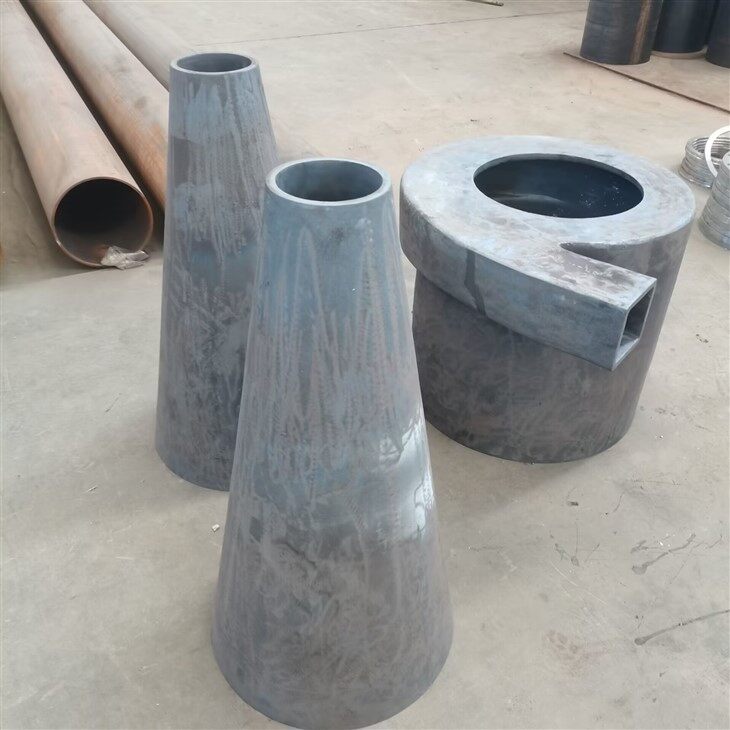


Zibo Chenyi Advanced Materials Co., Ltd. is one of the leading manufacturers and suppliers of hydrocyclone lining with sand packing in China, also supports customized service. If you're going to buy CE approved hydrocyclone lining with sand packing made in China, welcome to get quotation from our factory. Quality products and low price are available.
Abrasion resistsant Ceramic Hydrocyclone Lining with Sand Packing

Hydrocyclone lining with sand packing refers to the use of a replaceable, abrasion-resistant internal lining-often ceramic or urethane-within a hydrocyclone (a cone-shaped device) to protect its outer steel shell from the erosive wear caused by high-velocity sand particles. This design allows for easy replacement of the worn lining without needing to replace the entire cyclone body, significantly extending the equipment's service life.
Hydrocyclone Lining with Sand Packing Applied Across Different Industries
| Industry / Application | Lining Material | Core Function & Key Features |
| Oil & Gas (Produced Water) | High-grade ceramics (e.g., Alumina, Silicon Carbide) | Removing damaging solids (sand, scale) from wellhead water to prevent erosion of downstream equipment and meet environmental discharge standards. |
| Aggregate & Mining (Sand Production) | Cast urethane or rubber (e.g., 10mm thick rubber) | Separating sand from water and fines to produce a sellable, dewatered sand product. Urethane linings are chosen for durability and wear resistance. |
| Mineral Processing | Wear-resistant alloys or ceramics | Concentrating minerals by separating heavy particles from lighter ones. The "sand packing" is the concentrated, heavier product discharged from the bottom. |
How Sand Packing Works
Steel Shell: provides structural support.
Sand Packing: placed between steel shell and lining (rubber or ceramic).
Typical mix: clean sand + cement / epoxy
Sand absorbs vibrations and distributes load.
Lining Layer:
Ceramic or rubber tiles installed over sand
Fixed by bonding, mechanical anchoring, or dovetail slots
Benefits of Sand Packing:
Reduces liner detachment
Distributes impact loads evenly
Lowers stress on brittle ceramic tiles
Hydrocyclone Lining with Sand Packing Design Considerations
| Parameter | Recommendation |
| Liner material | Ceramic for fine/high-abrasion, rubber for coarse/impact-heavy |
| Sand packing density | Compact enough to prevent voids, ~1.8–2.0 g/cm³ |
| Liner thickness | 6–20 mm for ceramic, 10–30 mm for rubber |
| Apex & feed | Use harder lining where slurry velocity is highest |
| Installation | Ensure no gaps between sand packing and lining to avoid wear |
Hydrocyclone Lining with Sand Packing Applications
Mineral processing: sand, iron ore, phosphate, bauxite
Coal preparation: separating fine coal from slurry
Chemical industry: slurry separation in abrasive liquids
Water treatment: removing heavy particles from wastewater


