

Basalt lined pipes are a remarkable innovation in the field of industrial piping, offering a unique combination of physical properties that make them highly suitable for a wide range of applications. As a supplier of Basalt Lined Pipe, I am excited to delve into the details of these properties and explain why they are such a valuable choice for various industries.
Density and Mass
One of the fundamental physical properties of Basalt Lined Pipe is its density. Basalt, the primary lining material, has a relatively high density compared to many other materials used in piping. This density typically ranges from 2.8 to 3.2 g/cm³. The high - density nature of basalt contributes to the overall mass of the pipe. While a heavier pipe might seem like a drawback at first glance, it actually provides several benefits.
The increased mass gives the pipe greater stability. In applications where the pipe is subject to external forces such as vibrations or impacts, the higher mass helps the pipe resist movement and damage. For example, in mining operations where pipes are used to transport abrasive slurries, the stability provided by the high - density basalt lining ensures that the pipe remains in place and functions effectively over an extended period.
Hardness and Abrasion Resistance
Basalt is an extremely hard material. It has a Mohs hardness of around 6 - 7, which is comparable to some types of steel. This high hardness is crucial for the abrasion resistance of Basalt Lined Pipe. When used in industries that involve the transportation of abrasive materials, such as coal - fired power plants (for ash handling), mining (for slurry transportation), and cement plants (for conveying raw materials), the basalt lining can withstand the constant rubbing and scraping of solid particles.
The abrasion resistance of Basalt Lined Pipe is far superior to that of traditional steel pipes. Steel pipes can wear out quickly when exposed to abrasive substances, leading to frequent replacements and high maintenance costs. In contrast, the basalt lining can significantly extend the service life of the pipe. For instance, in a coal - fired power plant, a Basalt Lined Pipe for ash handling can last up to 5 - 10 times longer than a regular steel pipe, reducing downtime and replacement expenses. This makes Basalt Lined Pipe a cost - effective solution in the long run.
Thermal Properties
Basalt has good thermal stability. It can withstand high temperatures without significant deformation or loss of its physical properties. The melting point of basalt is generally above 1000°C, which means that Basalt Lined Pipe can be used in high - temperature applications.
In industries such as metal smelting, where molten metals or hot gases are transported through pipes, the thermal stability of basalt lining ensures that the pipe can operate safely and efficiently. The basalt lining acts as a thermal barrier, protecting the outer steel casing of the pipe from the high - temperature environment. This not only extends the life of the entire pipe system but also enhances the safety of the operation.
On the other hand, basalt also has relatively low thermal conductivity. This means that it does not transfer heat quickly. In applications where heat conservation is important, such as in some chemical processing industries, Basalt Lined Pipe can help reduce heat loss during the transportation of hot fluids, improving energy efficiency.
Chemical Resistance
Basalt is highly resistant to a wide range of chemicals. It can resist the corrosion caused by acids, alkalis, and many other corrosive substances. This chemical resistance makes Basalt Lined Pipe suitable for use in chemical processing plants, wastewater treatment facilities, and other industries where pipes come into contact with corrosive materials.

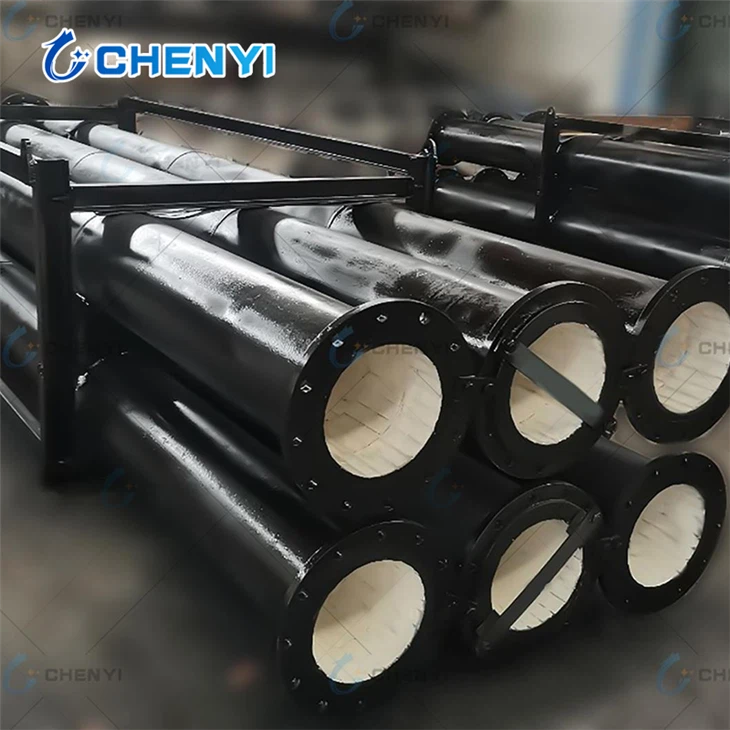
For example, in a chemical plant that produces strong acids or alkalis, a Basalt Lined Pipe can withstand the corrosive effects of these chemicals without deteriorating. This is in contrast to unlined steel pipes, which can corrode rapidly when exposed to such substances, leading to leaks and potential safety hazards. The chemical resistance of basalt lining ensures the integrity of the pipe system and the safety of the overall operation.
Smoothness of the Inner Surface
The inner surface of Basalt Lined Pipe is very smooth. This smoothness has a significant impact on the flow characteristics of the fluid or slurry being transported. A smooth inner surface reduces friction between the pipe wall and the flowing material.
In fluid - transportation systems, the reduced friction means that less energy is required to pump the fluid through the pipe. This leads to energy savings and lower operating costs. For example, in a water - supply system, using Basalt Lined Pipe can reduce the pumping power required, saving electricity and money. In slurry - transportation applications, the smooth surface also helps prevent the deposition of solid particles on the pipe wall, which can cause blockages and reduce the efficiency of the system.
Applications and Related Products
The unique physical properties of Basalt Lined Pipe make it suitable for a wide range of applications. In addition to the industries mentioned above, it can also be used in the oil and gas industry for transporting abrasive fluids and in the pulp and paper industry for handling pulp and chemicals.
If you are interested in related products, we also offer Ceramic - Lined Pipe Spools, which have similar advantages in terms of abrasion resistance and can be customized to meet specific project requirements. Our Basalt Lined Pipe is designed to provide long - lasting performance in harsh environments. And for applications that require flexibility, our Stone Lined Swivels are an excellent choice.
Contact for Purchase and Negotiation
If you are in need of high - quality Basalt Lined Pipe or any of our related products, we invite you to contact us for further discussion. Our team of experts is ready to assist you in choosing the right products for your specific application, answering your technical questions, and providing competitive pricing. Whether you are a large - scale industrial enterprise or a small - scale business, we can offer solutions tailored to your needs.
References
- "Handbook of Industrial Piping Materials", John Wiley & Sons, Inc.
- "Abrasion Resistance of Advanced Materials", Elsevier Publications.
- "Thermal Properties of Construction Materials", Springer Science+Business Media.